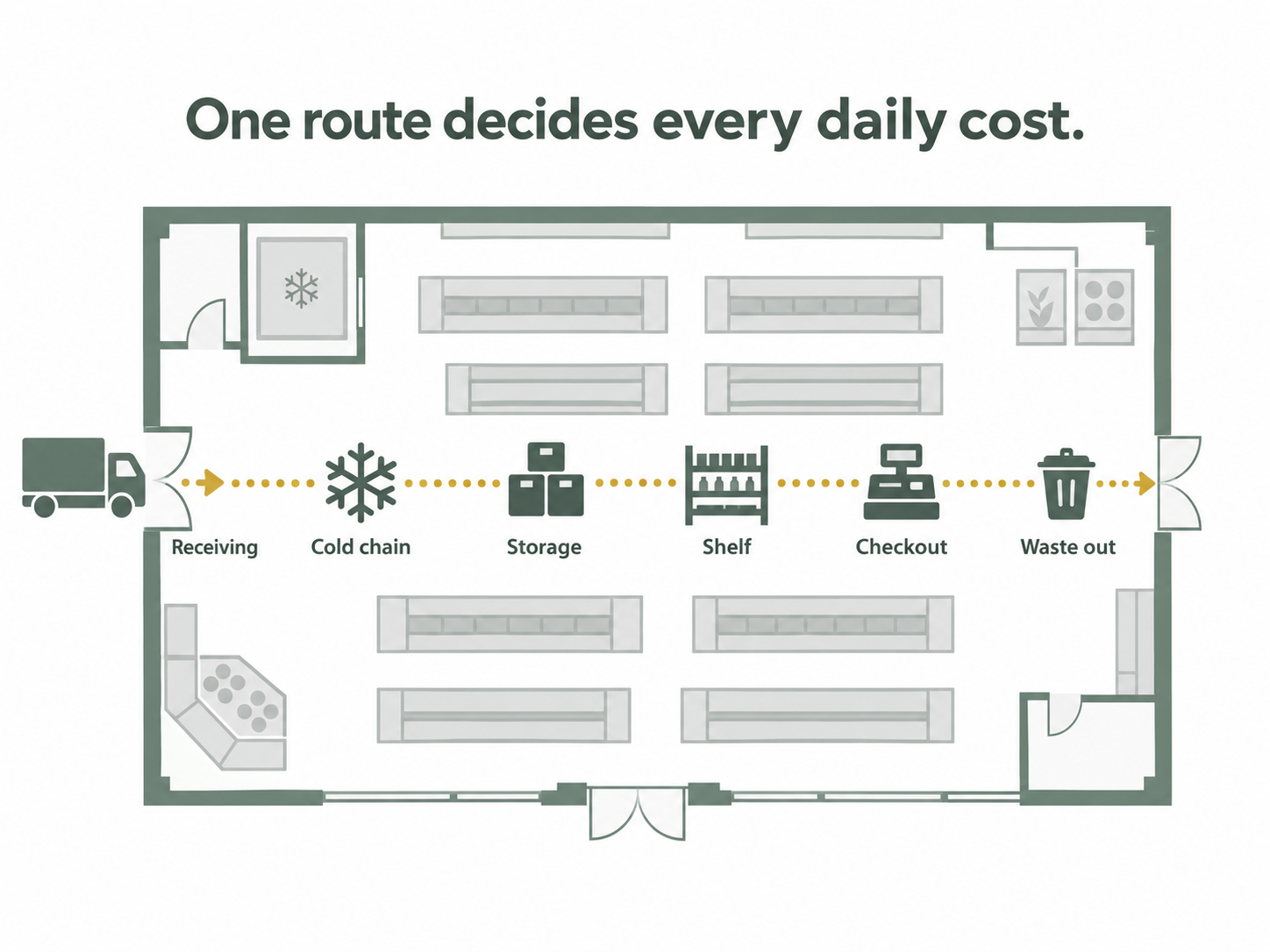
How to Design a Supermarket That's Easy to Run
Setup cost is paid once. Running cost is paid every trading day for the life of the store — and almost all of it is decided on a drawing before anyone is hired to run the place. Here is the one route through a supermarket that sets its labour, waste, shrink and energy bills, and where to read the detail for each stage.
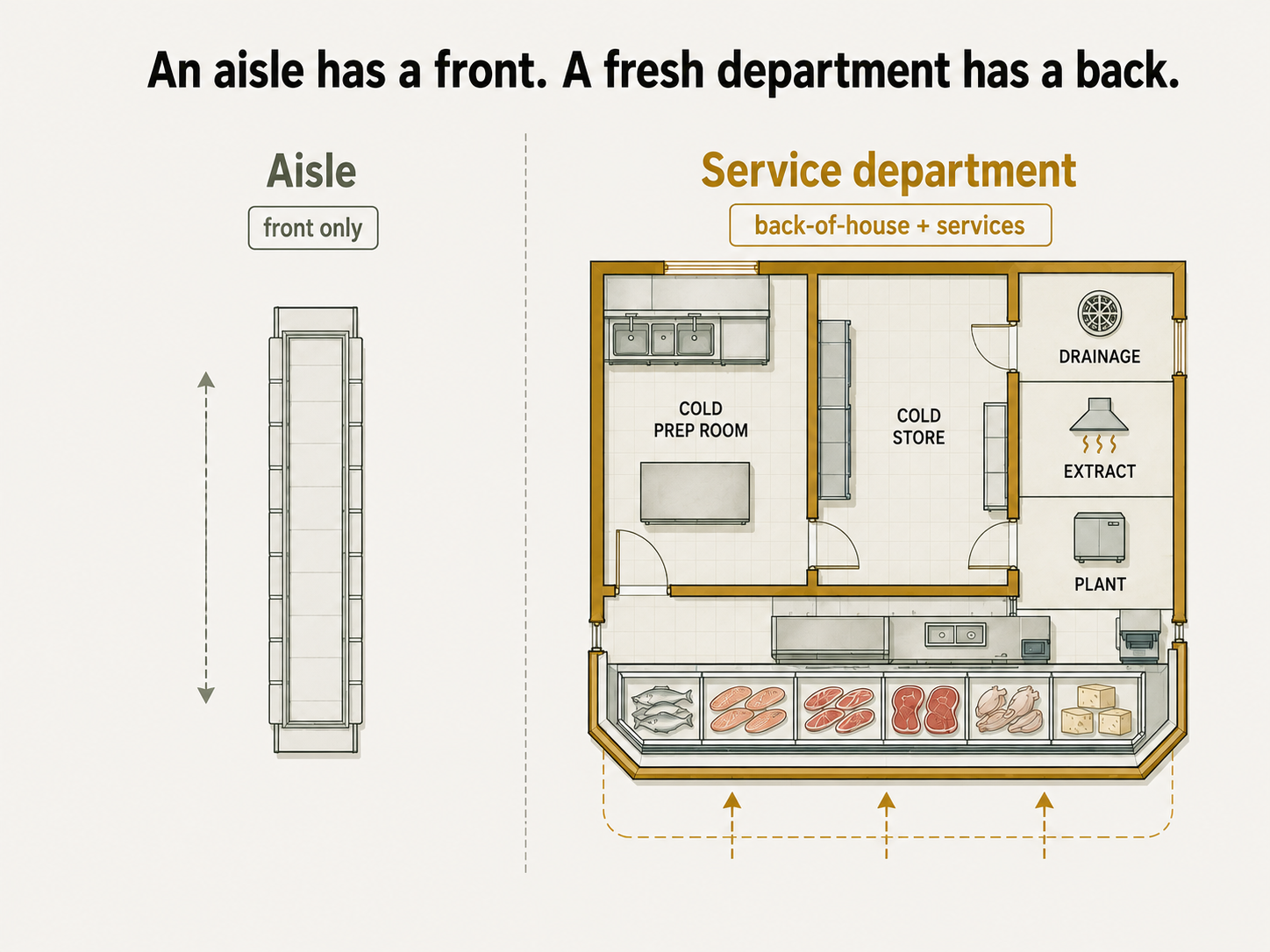
How to Plan a Supermarket's Fresh and Service Departments
A shopper chooses a supermarket for its fresh departments — so why are they usually drawn the same way as the aisles? An aisle has a front; a butchery, bakery, deli or kitchen has a back. Here is the three-step sequence that plans one properly, the services that have to be settled before the slab, and what to light each department at.
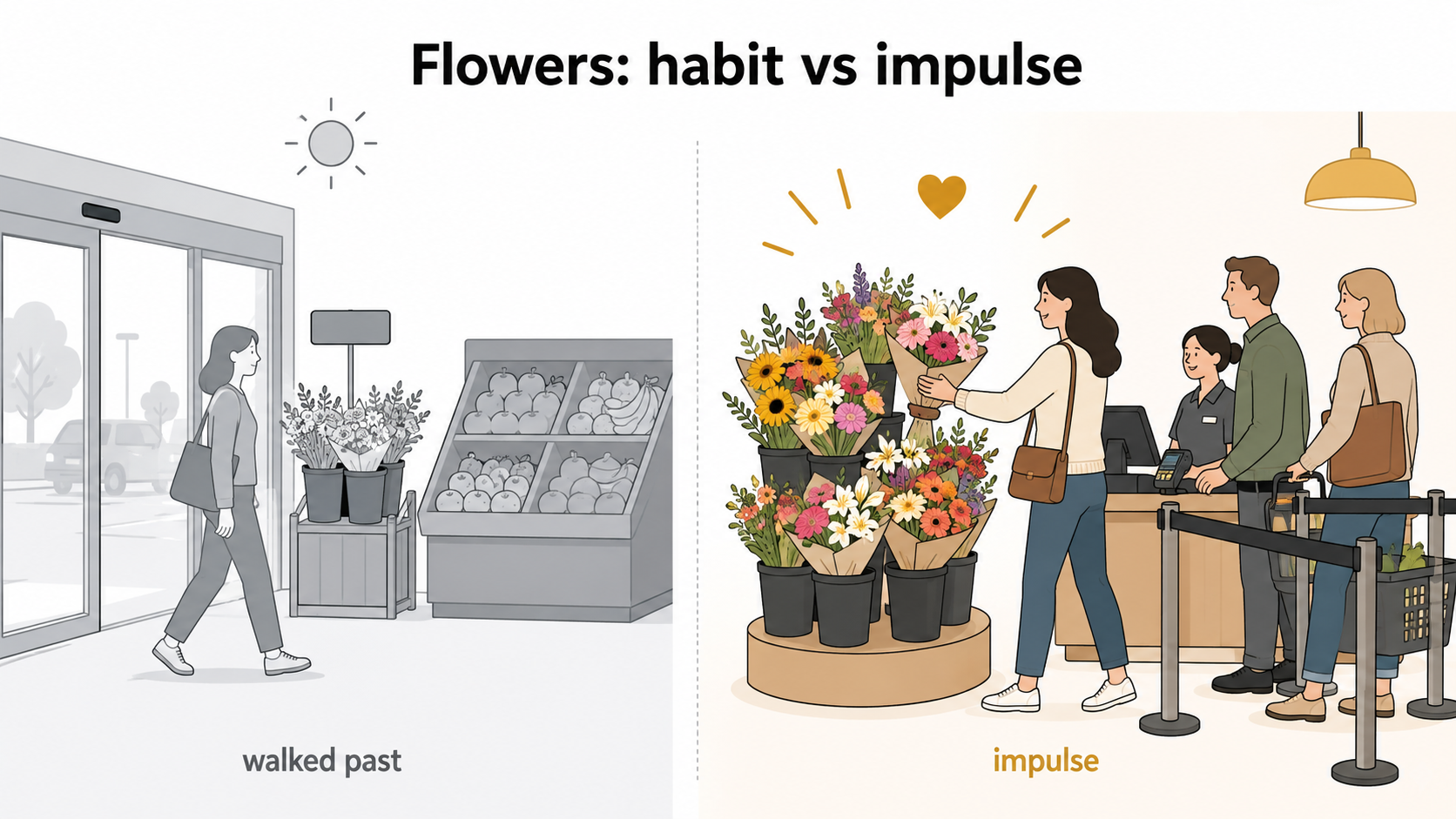
Where to Put Flowers in a Supermarket (Placement & Impulse)
Flowers nearly always go just inside the front doors — but that's usually habit, not planning. Flowers are an impulse perishable, and the entrance is high-traffic but low-intent, hard on a fragile product, and it stacks them next to the produce whose ethylene shortens their life. Here is where flowers actually sell hardest, and how to keep them lasting wherever they land.
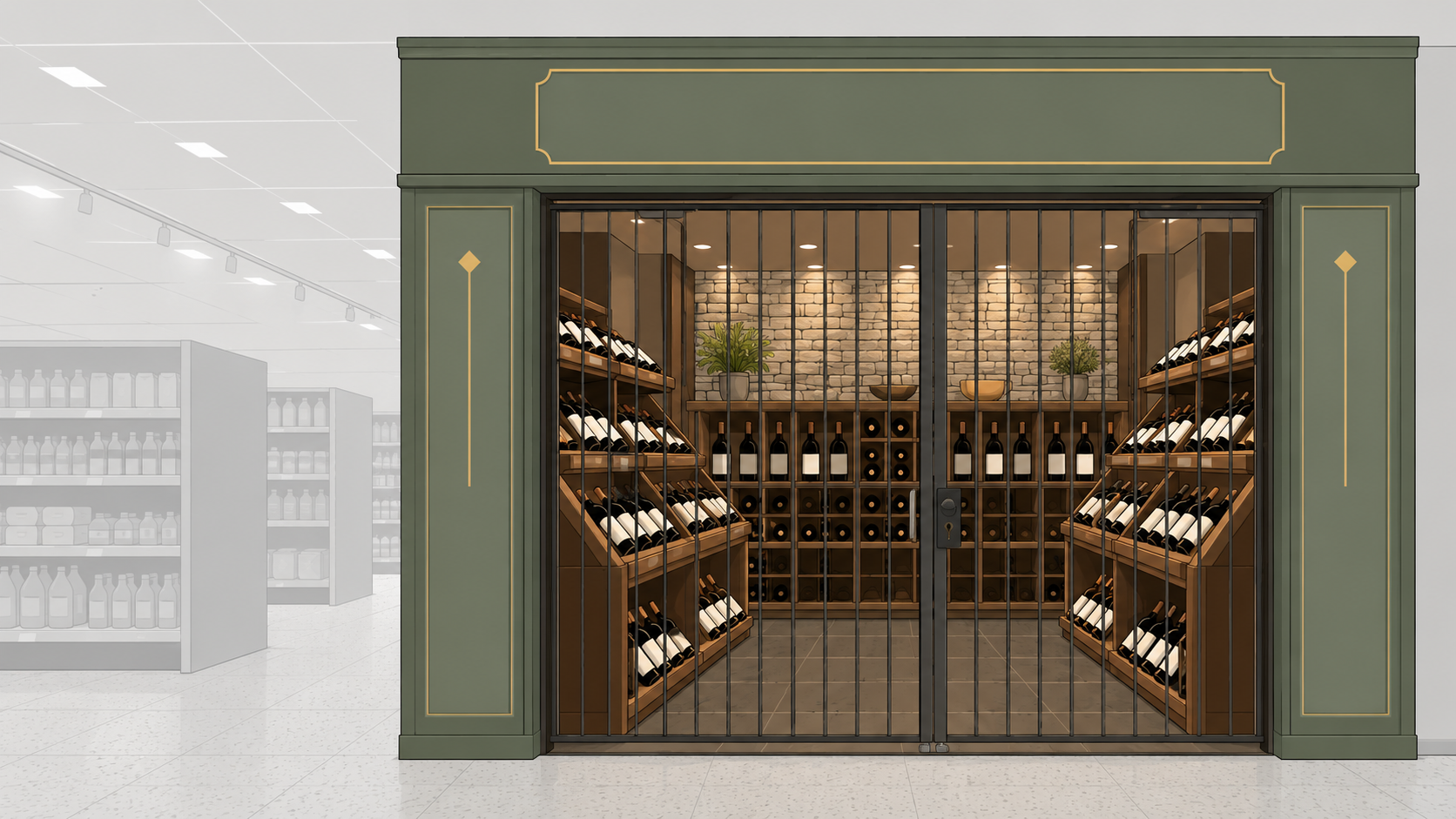
How to Plan a Supermarket Wine Department (Room vs Gondola Run)
Wine on a gondola gets walked past; wine in a room gets shopped. But wine is the one department where the law draws the first line — in South Africa a supermarket sells wine only, from a demarcated area that must lock shut after hours, on a dimensioned plan. Here is how to plan it: licence first, then turn that legally-required boundary into a room that builds the whole entertaining basket.
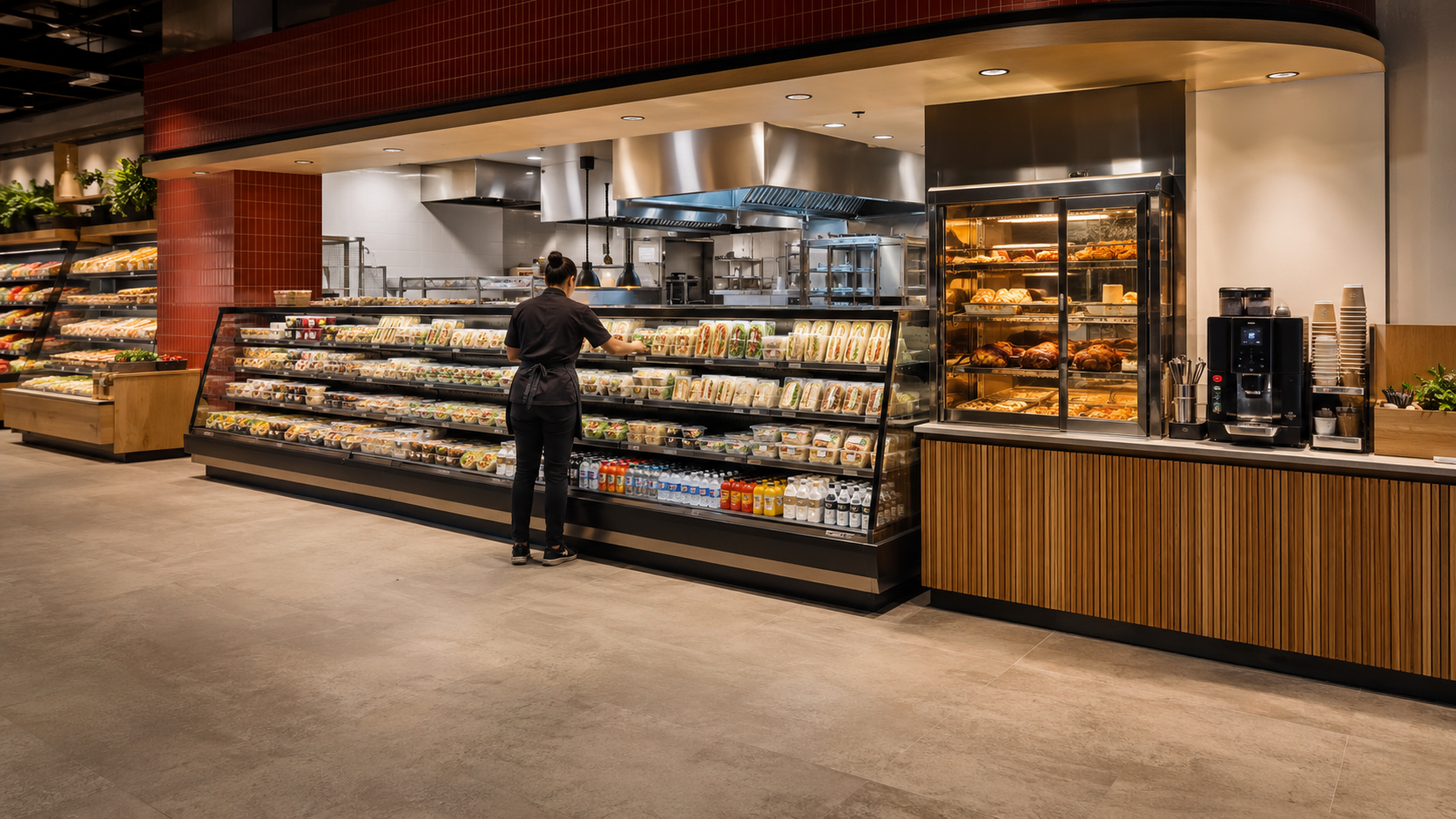
How to Plan a Supermarket Food-to-Go Department (Plan the Engine First)
Most food-to-go is designed as a shelf near the till, with the kitchen worked out later. That order is why so many offers stall under a weekday lunch. Here is the sequence that works: production model first — it's the labour and energy decision — then the hot and cold chains, the kitchen services fixed before the slab, a fast separate flow, and the meal deal that turns one item into a basket.
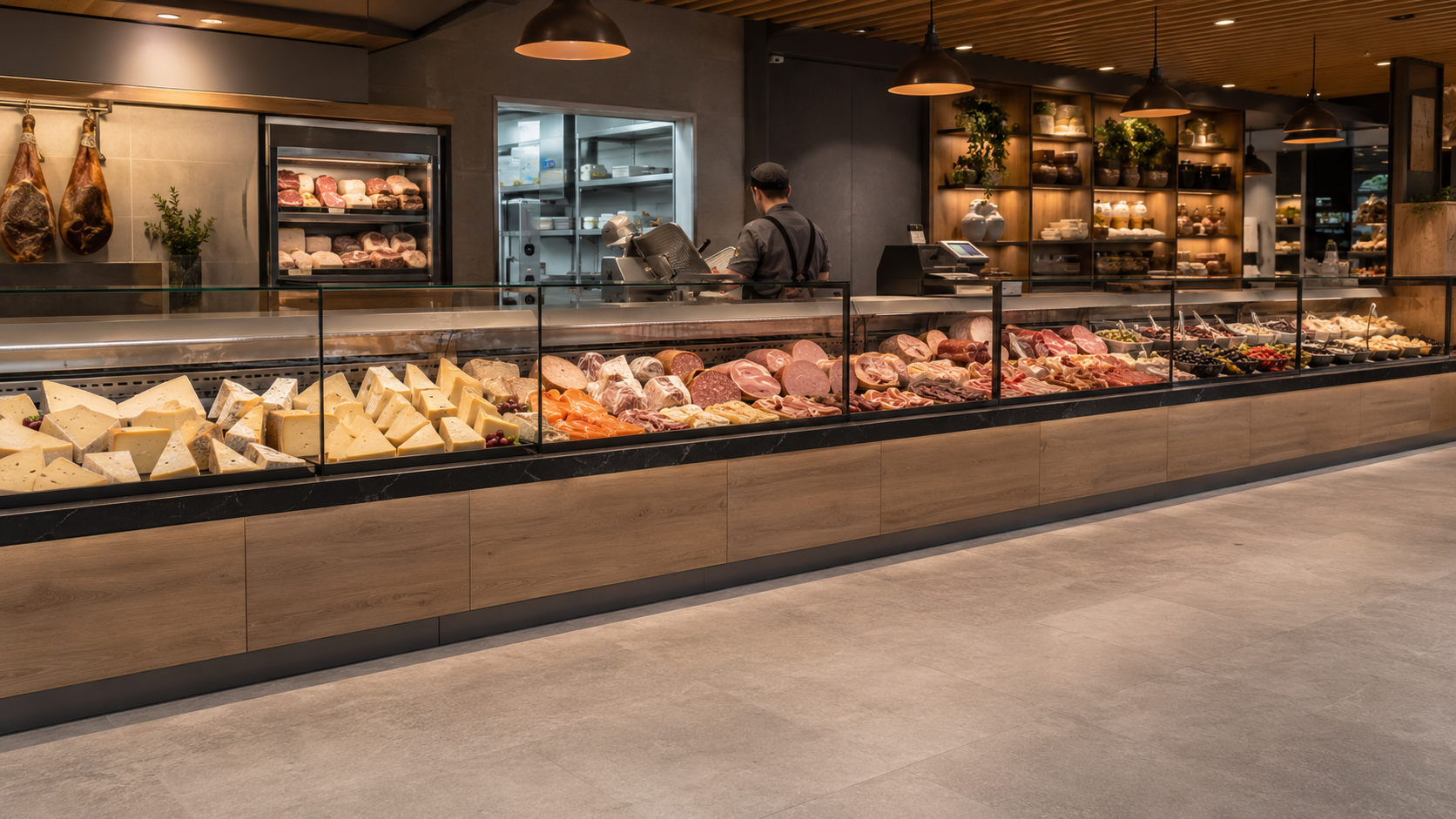
How to Design a Supermarket Deli Department (Start With the Service Model)
Most delis are designed as a chilled case, with the service worked out later. That order is why so many jam under a Saturday lunch. Here is the sequence that works: service model first — it's the labour decision — then the cold store behind the counter, the slicer and cheese discipline a case never faces, the queue, and the two baskets a deli owns.
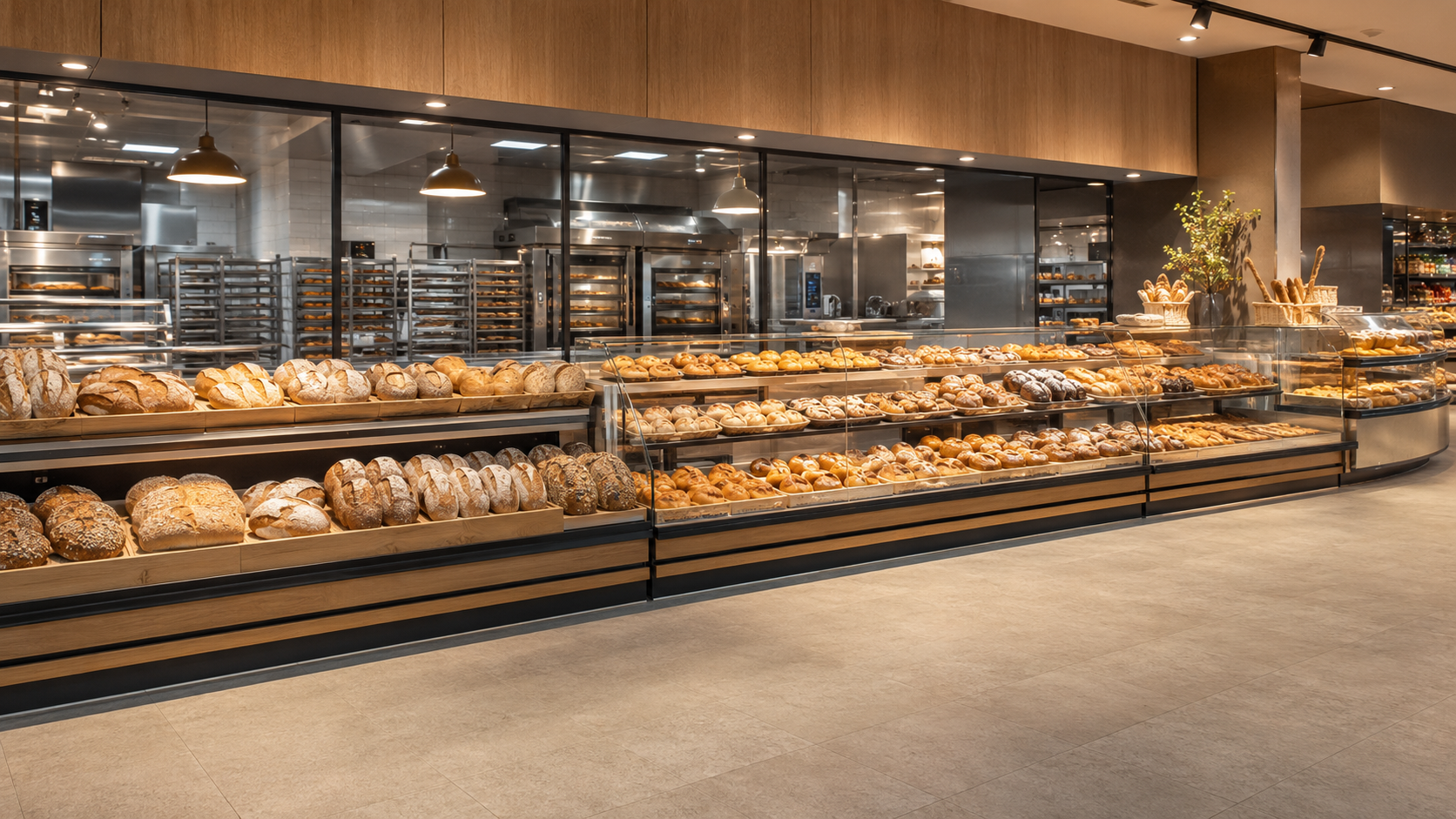
How to Design a Supermarket Bakery Department (Start With the Oven Room)
Most bakeries are designed as a bread shelf, with the oven room squeezed in behind. That order is why so many look the part on opening day and cannot hold quality at peak. Here is the sequence that works: production model first, then the back — heat, extract, flour dust and the cream cold chain — then aroma, merchandising and waste.

What Does It Cost to Fit Out a Supermarket in South Africa?
The honest answer to "what will it cost" — why there's no per-square-metre price for a supermarket, and the six factors that actually set your number, starting with the lease.
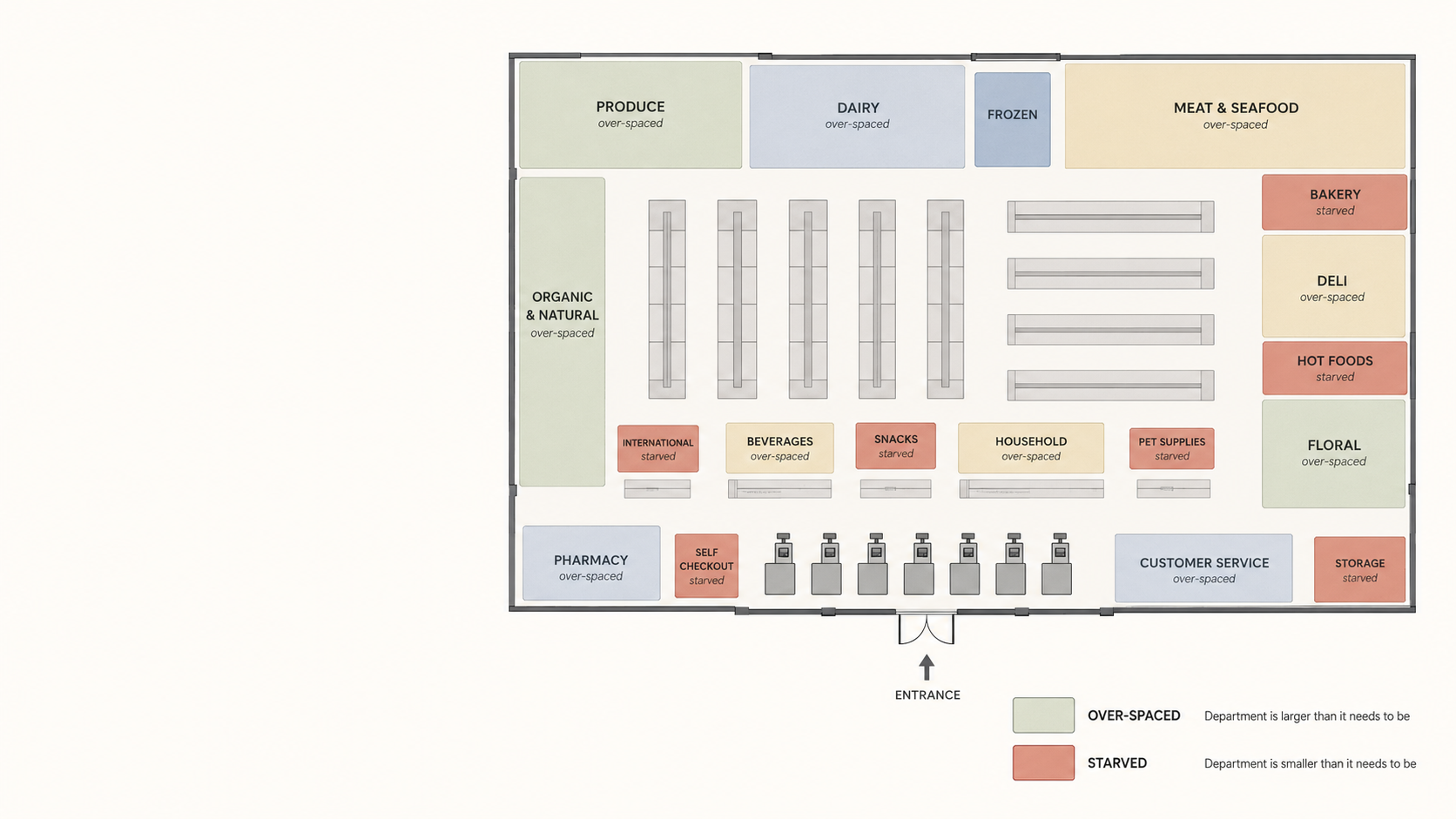
More Space Doesn't Mean More Sales: How to Split a Supermarket Floor by Department
Department space in most stores is inherited, not earned. Floor space is the one budget you can't top up — here's how to split it by what each department actually earns.
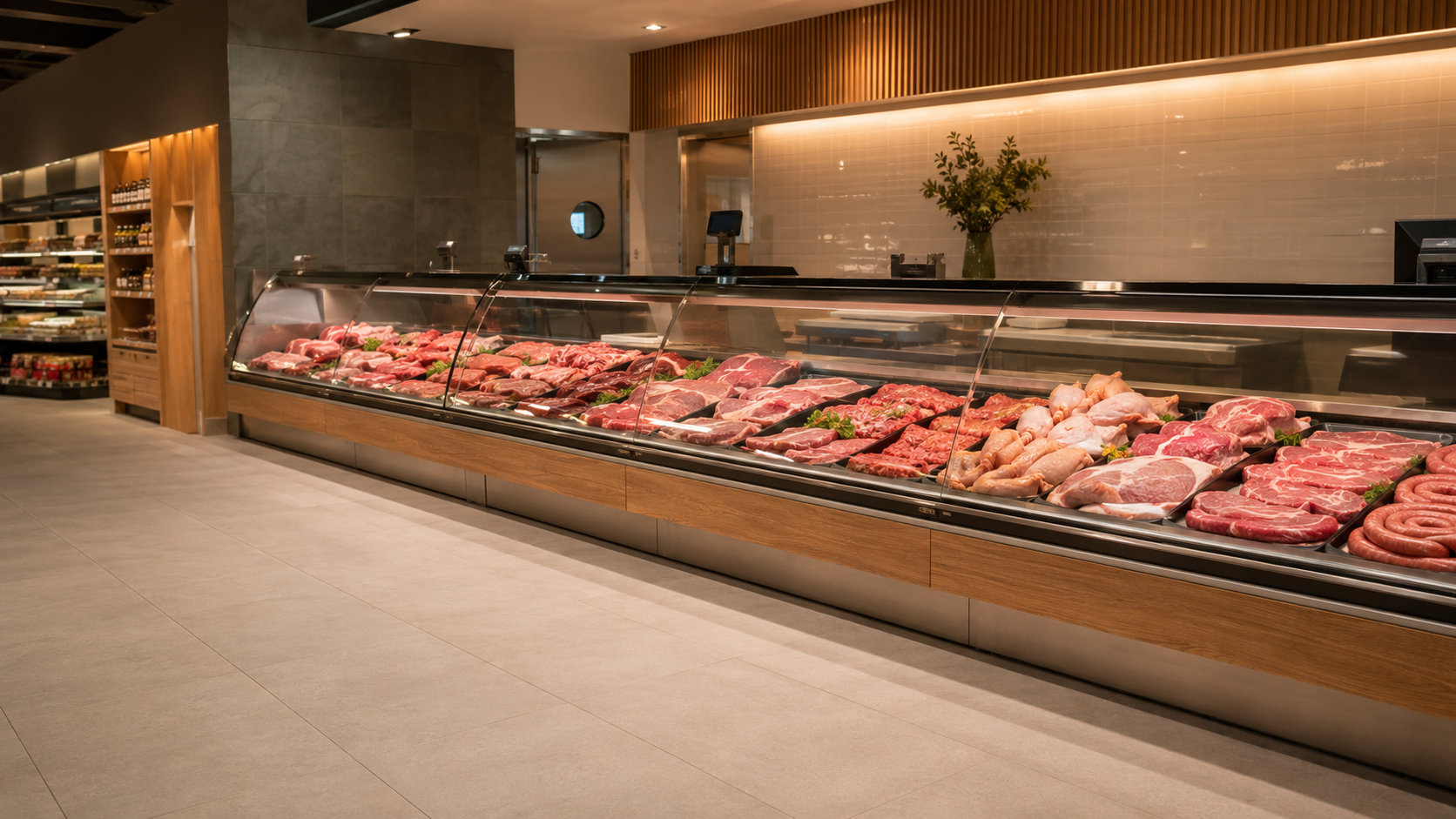
How to Plan a Supermarket Butchery Department (Start Behind the Counter)
Most butcheries are planned front to back — pick a counter, sort the rest out later. That order is why so many look right on opening day and cannot run a Friday morning. Here is the sequence that works: operating model, catchment, one-way flow, utilities, and only then the counter.
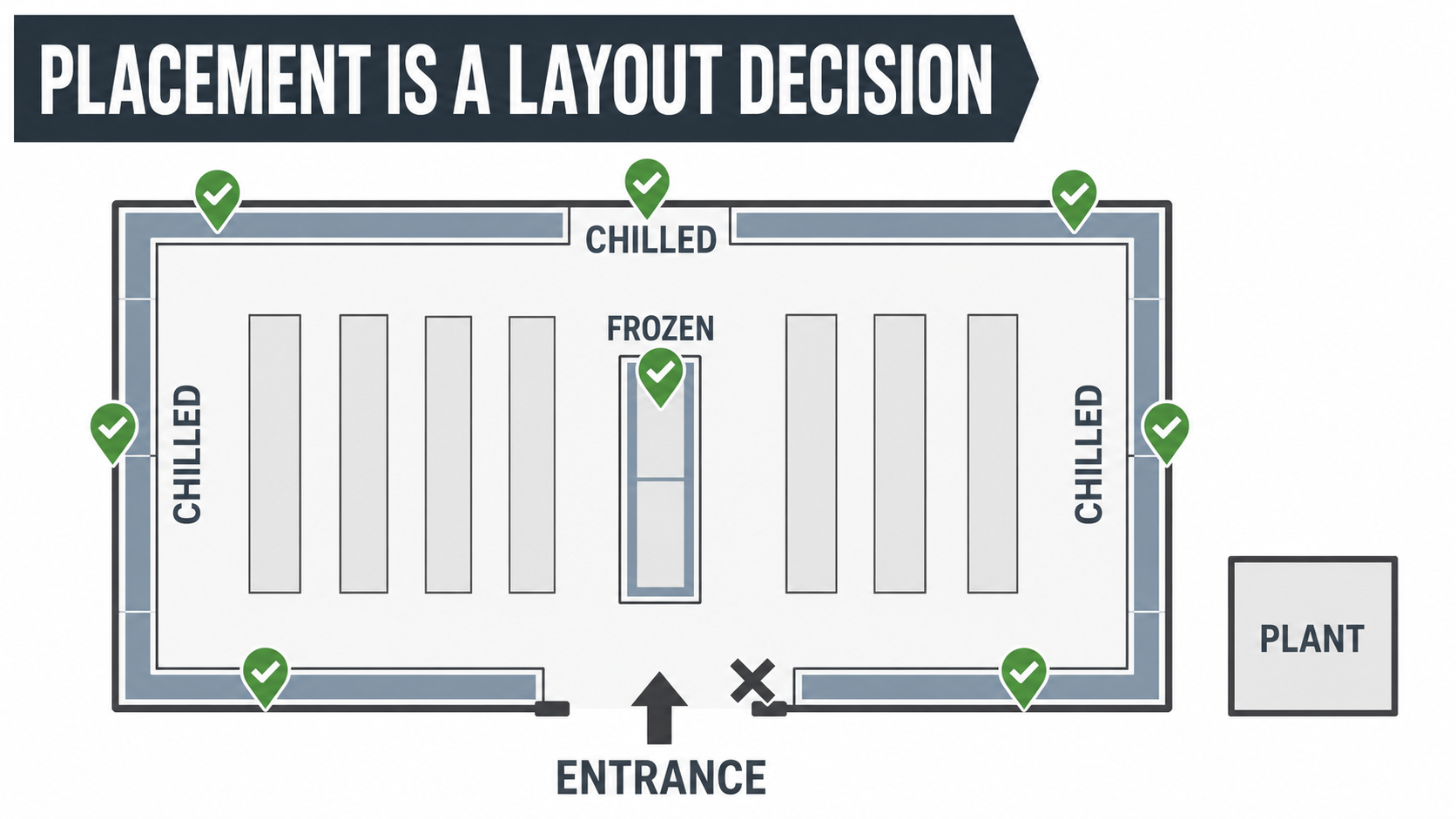
Where to Put Refrigeration in a Supermarket: Placement Is a Layout Decision
A cabinet fails because of where you put it — the entrance draft, the hot window, the missing drain — not usually because of the model. Place refrigeration against the real store, treat air-conditioning as part of the same system, buy display area rather than cabinets, and lock it on the drawing before anyone builds.
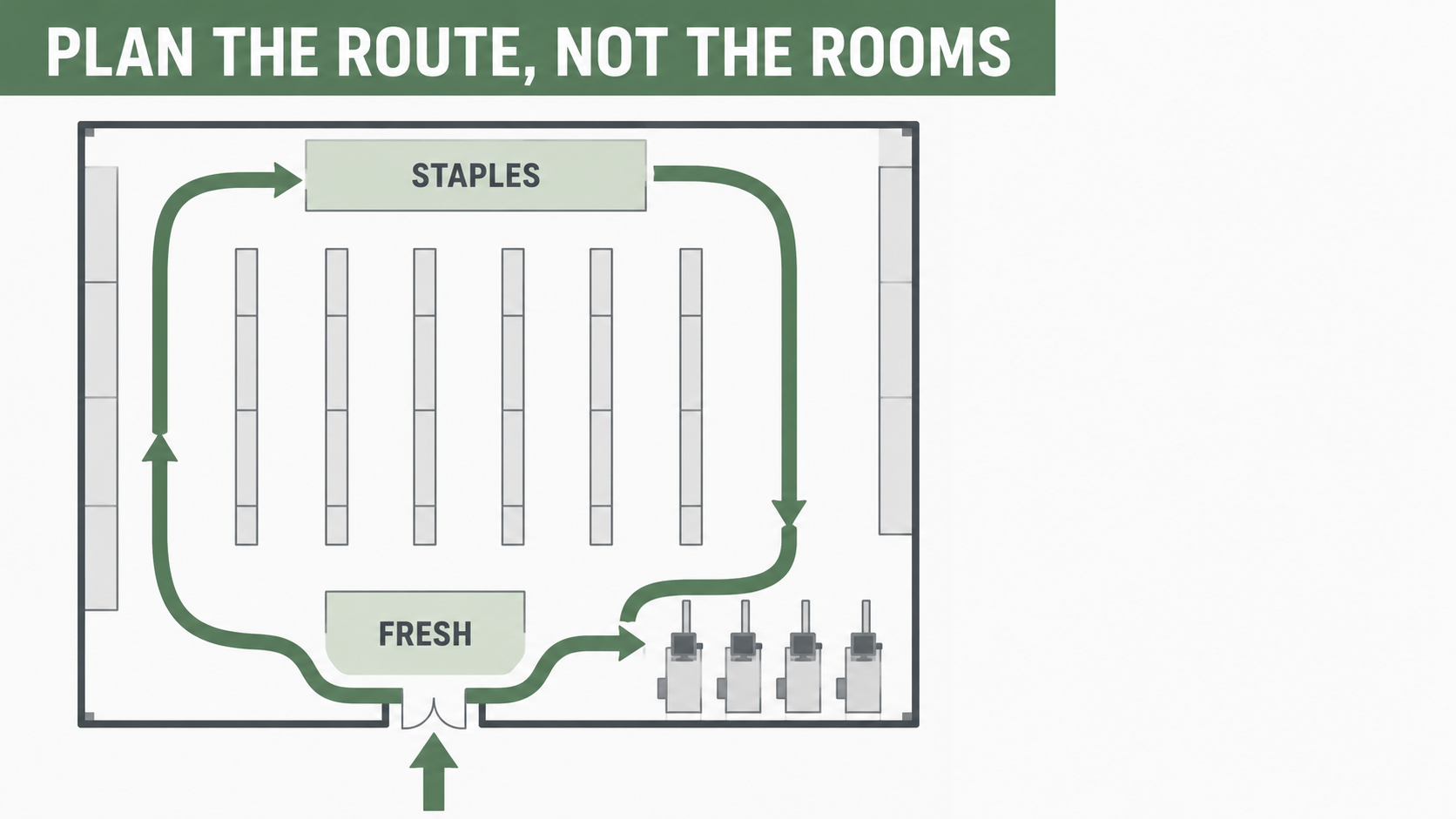
How to Lay Out a Store to Drive Sales: Plan the Route, Not the Rooms
Most stores are planned department by department, and the basket barely moves. Plan the store as one route instead — fresh first, staples deep, and the adjacencies that add the second and third item on the walk.
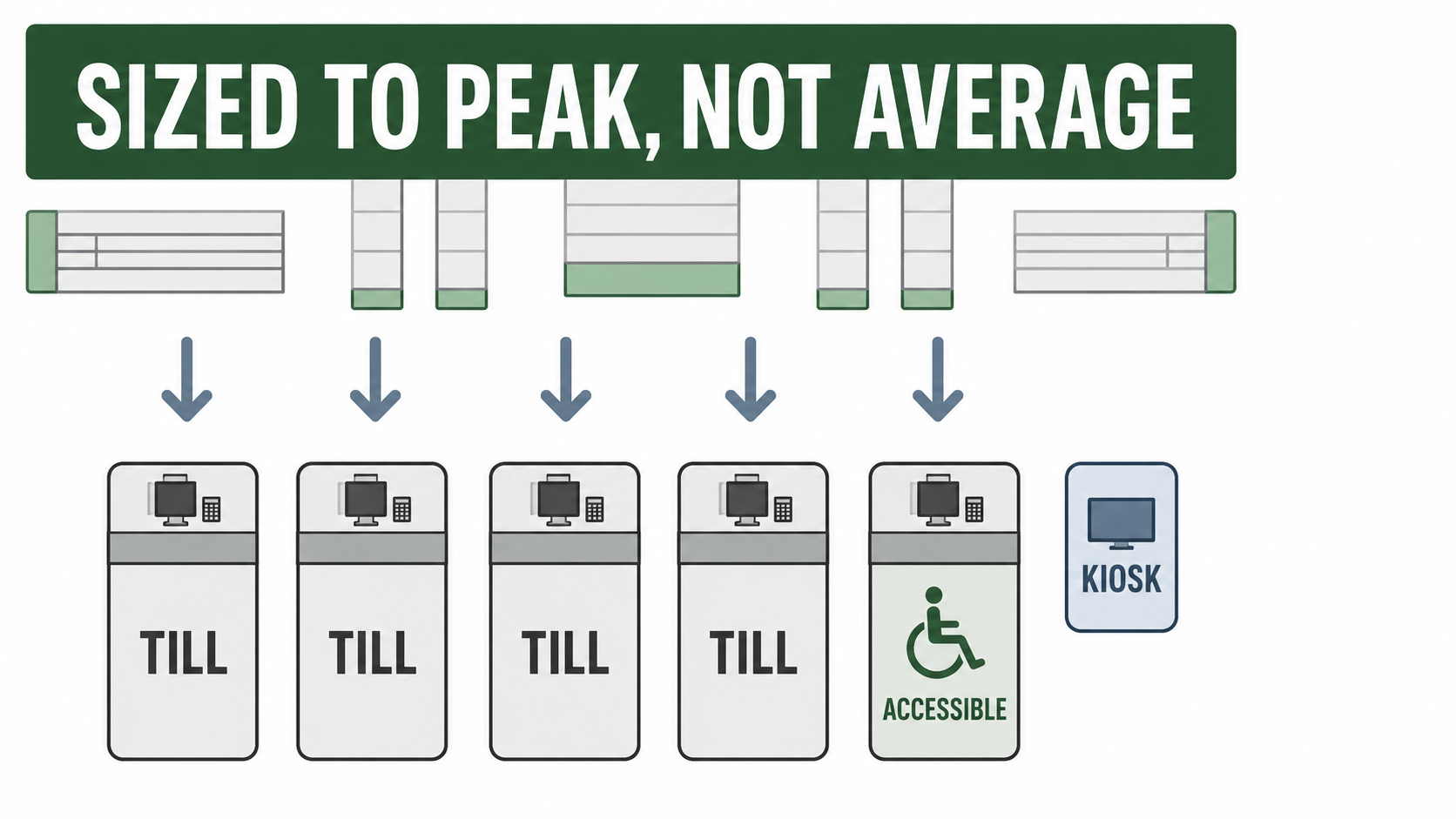
The Checkout Is the Last Metre of Selling — and Most Stores Size It Wrong
The front-end is where a store keeps or loses the sale it has already won. Size it on your busiest hour, dimension the lanes to your trolley, and plan impulse, accessibility and compliance in from the start.
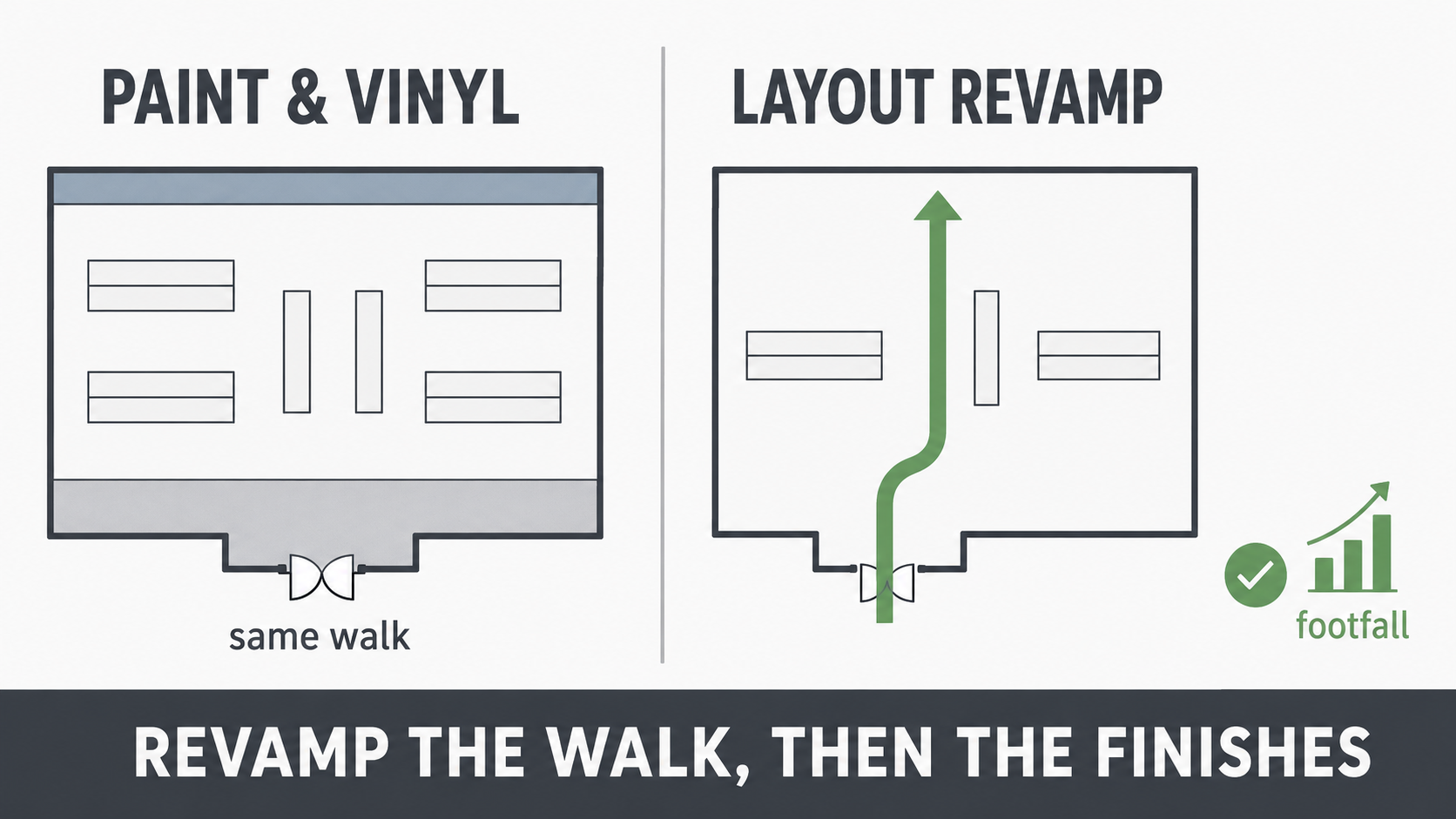
Planning a Supermarket Revamp to Lift Footfall
Most revamp budgets go to floors and paint, and footfall doesn't move. The levers that change the visit are layout levers — here are the seven, in order, with the numbers.
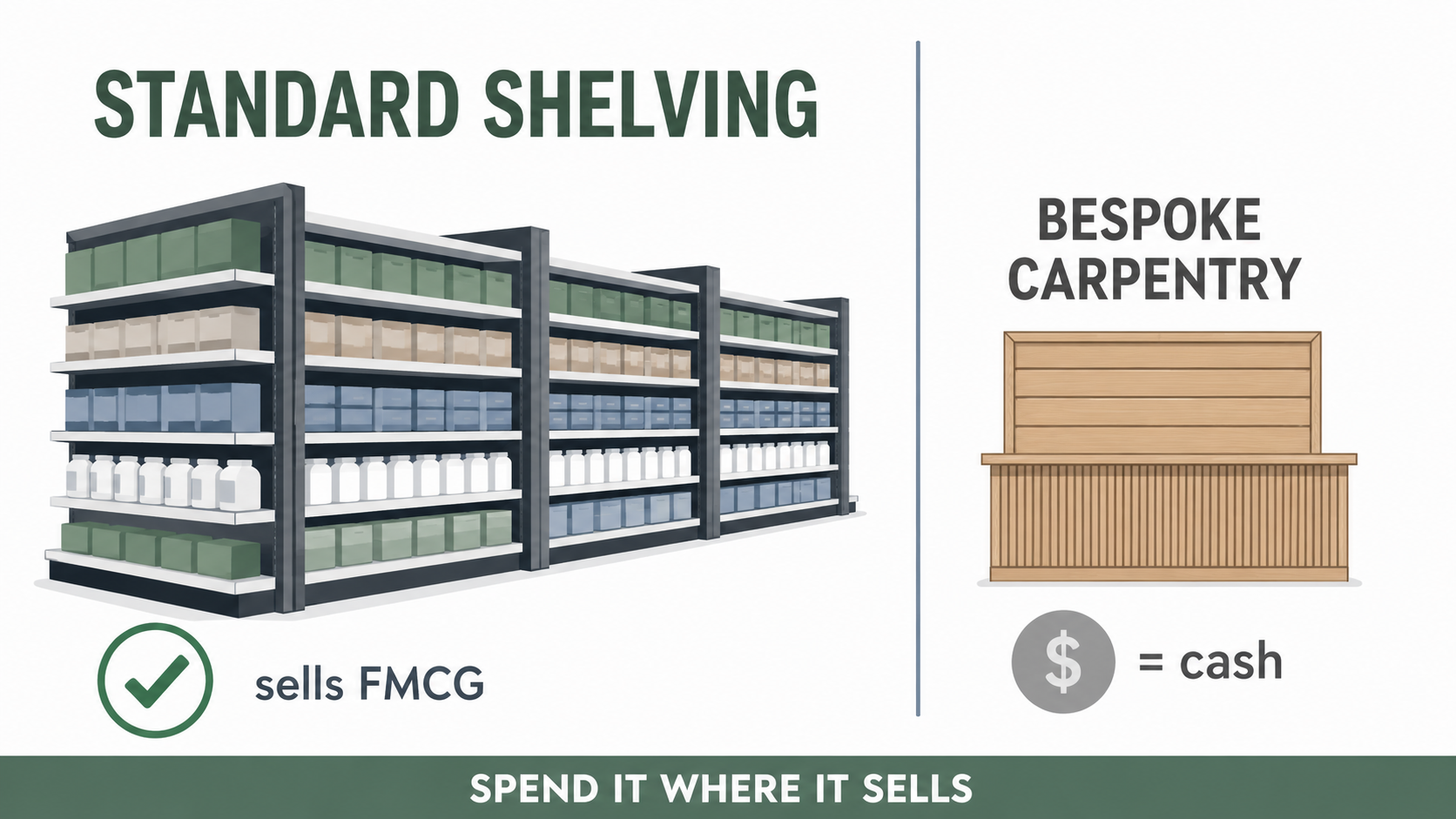
Most Supermarket Shopfitting Is Money You Don't Need to Spend
Standardised modular steel does most of the selling in a supermarket — and does it well. True shopfitting is the bespoke carpentry, and it's where the budget quietly disappears. Here's how to split the two.
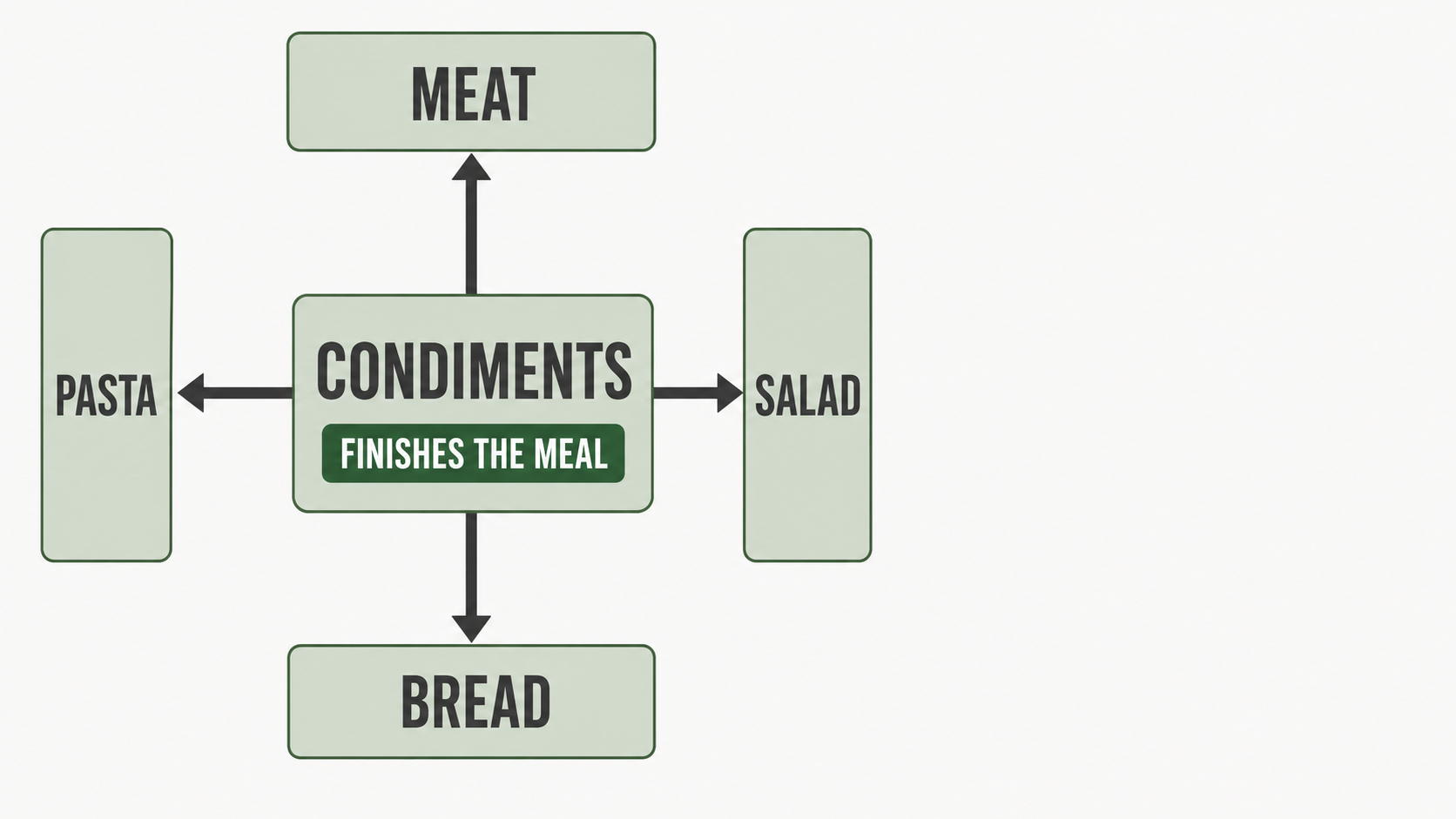
The Sauce Aisle Doesn't Start a Basket. It Finishes One.
Almost nobody shops for ketchup. The sauce, the marinade and the dressing go in on the way to the meal they finish — so the lever is position and cross-aisle cues, not aisle size.
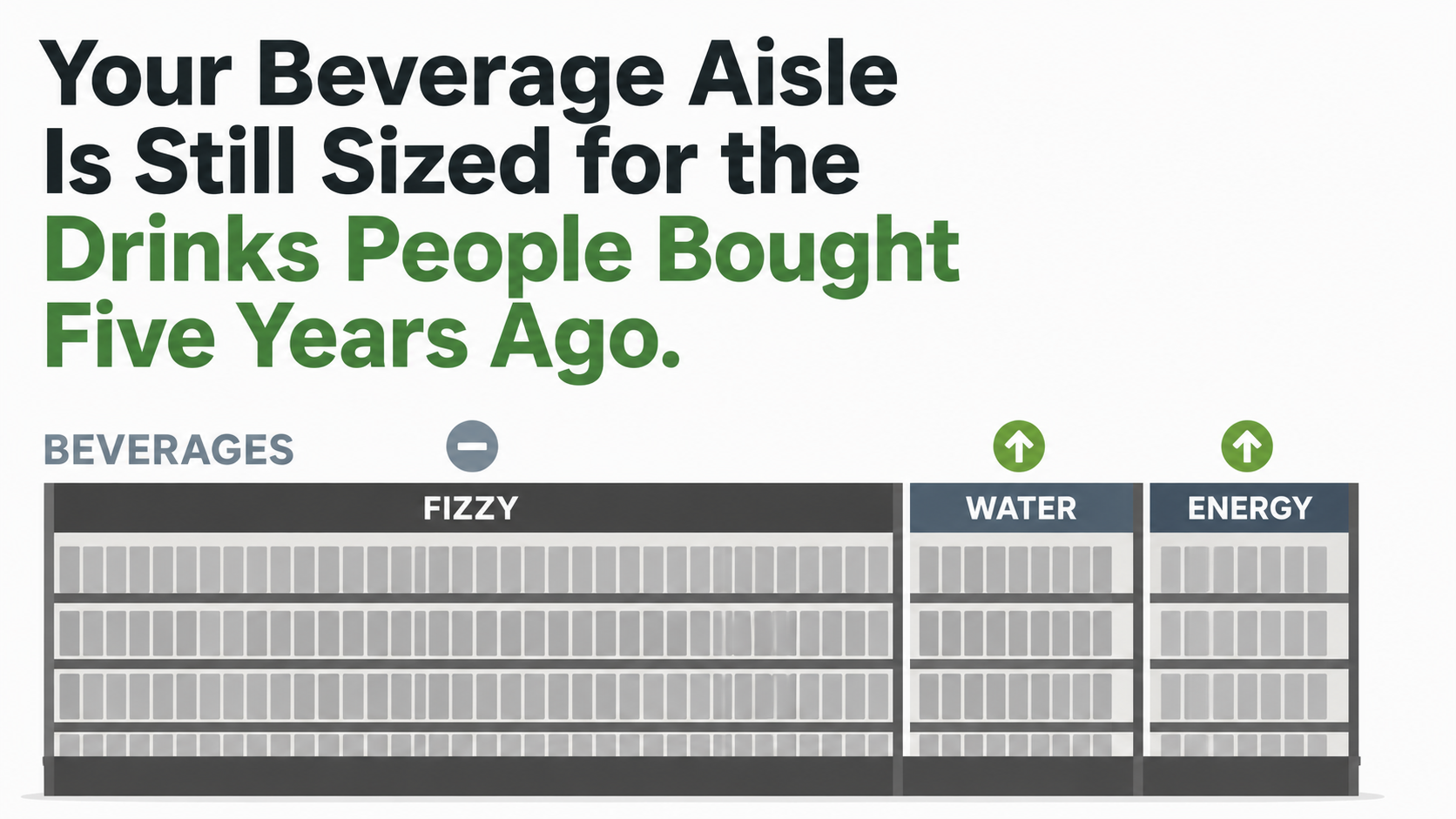
Your Beverage Aisle Is Still Sized for the Drinks People Bought Five Years Ago
Beverages have shifted faster than almost any category in the store, but most aisles are still split the way they were years ago — losing sales on the lines that are growing.
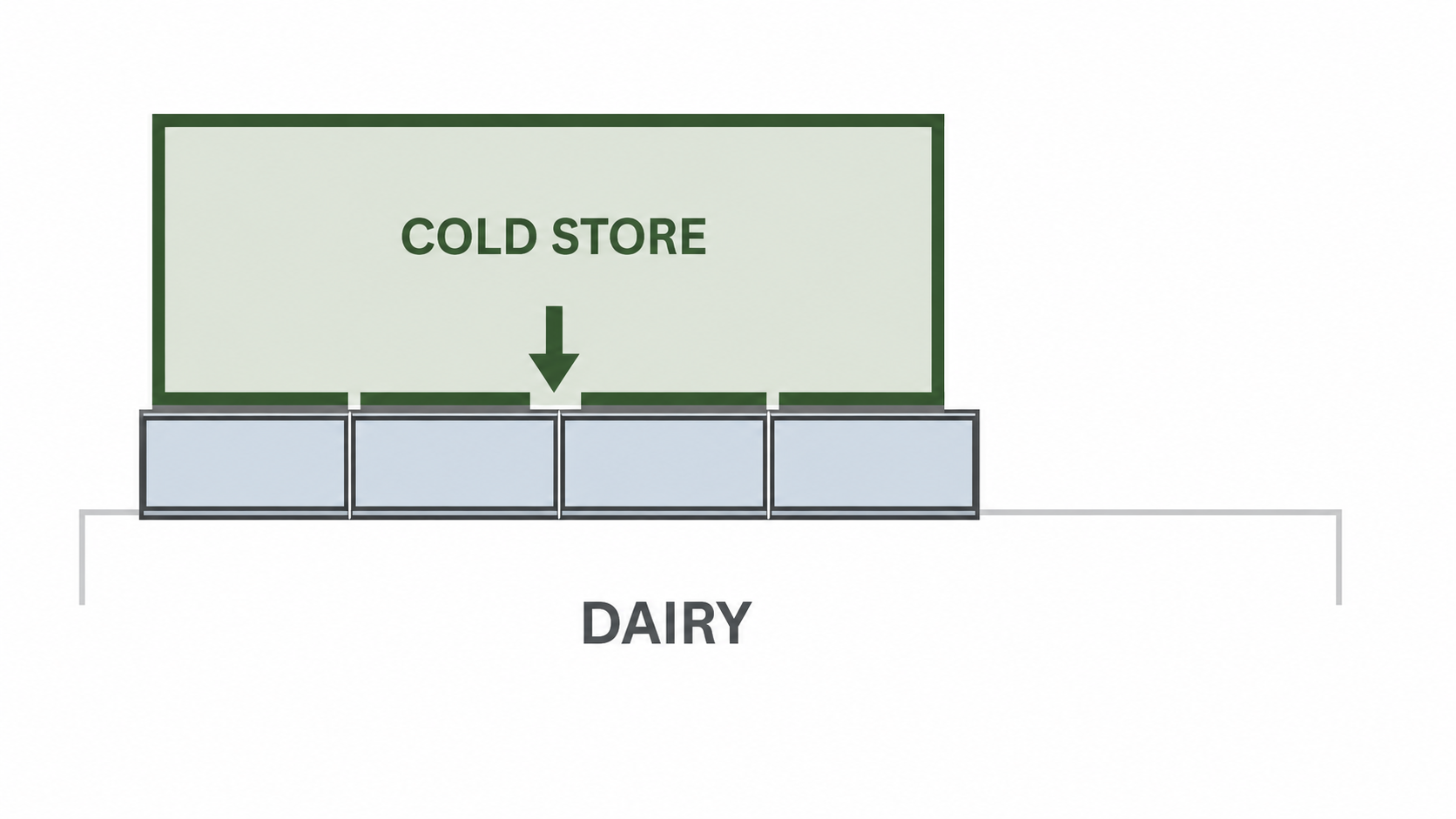
The Dairy Mistake You Can't See From the Shop Floor
Dairy cases can look perfect on opening day and still leak margin every week after. The cause is usually one early layout decision — the route from cold store to case.
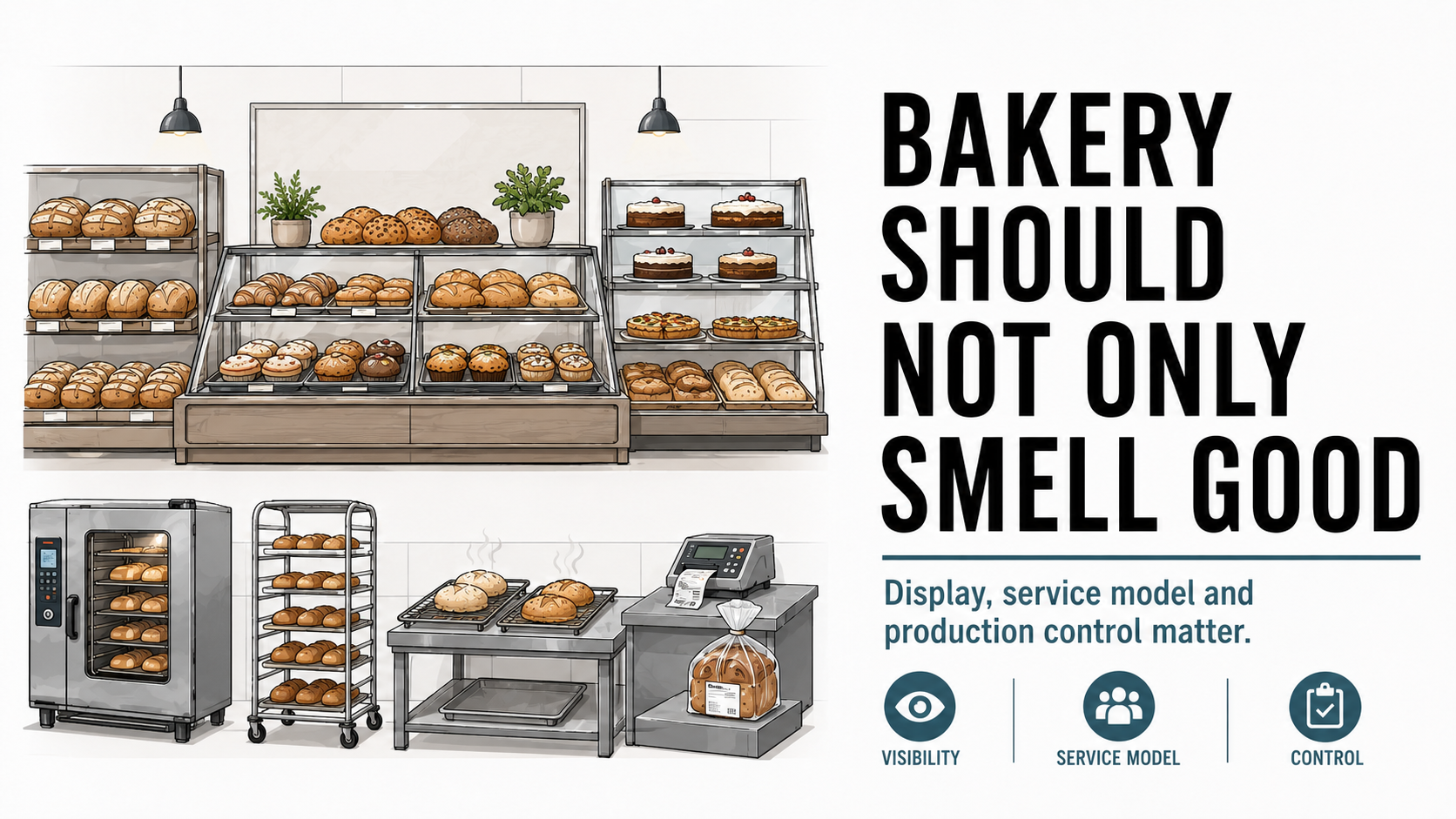
Bakery Should Not Only Smell Good
A supermarket bakery has strong emotional pull, but smell and theatre are not enough. Bakery only earns its space when display, service model, production flow and operational control work together.
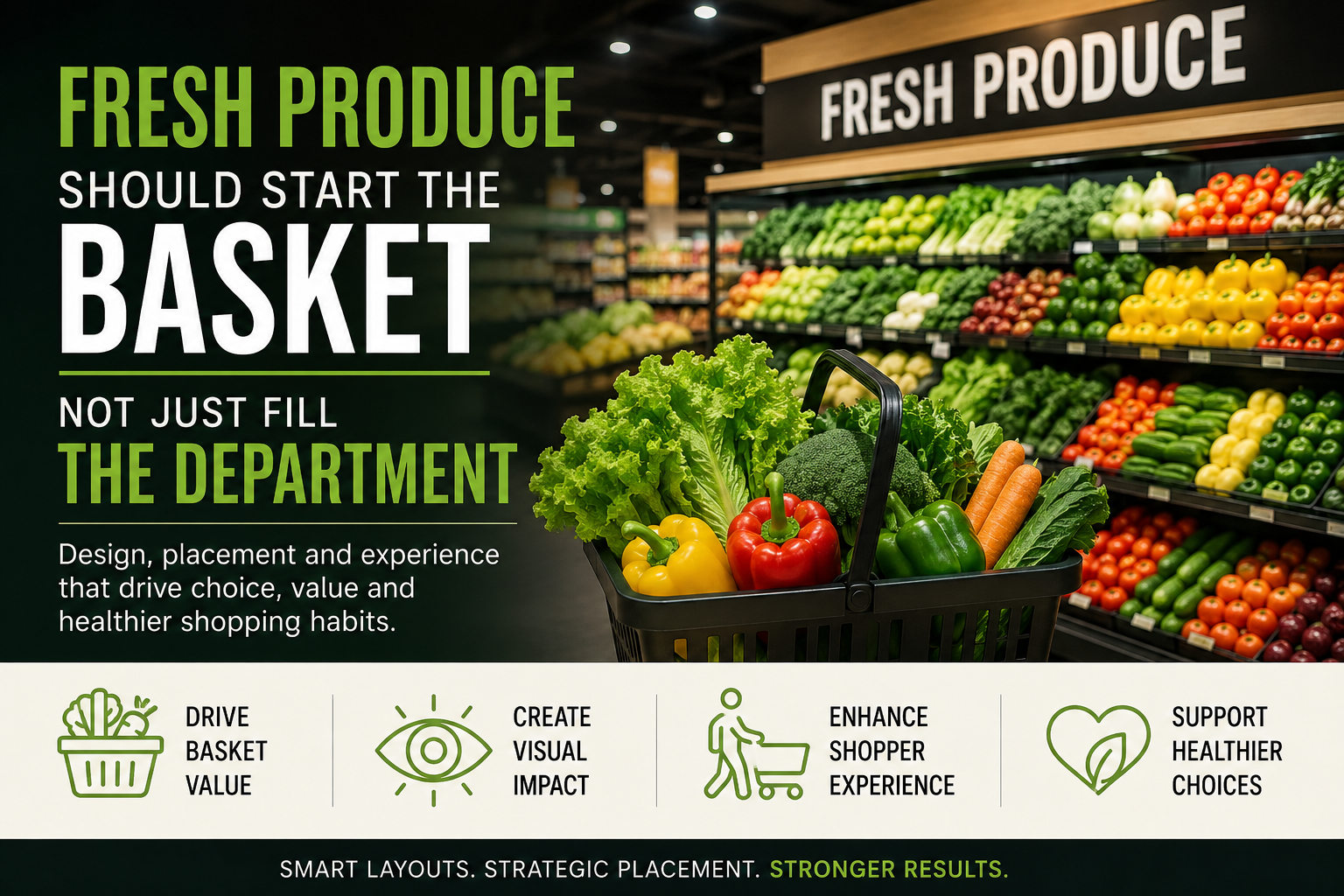
Fresh Produce Should Start the Basket, Not Just Fill the Department
Fruit & Veg is one of the first departments shoppers use to judge a supermarket. But it should do more than look fresh. A well-planned fresh produce department can support meal decisions, link to other departments and help build the basket.