The Sauce Aisle Doesn't Start a Basket. It Finishes One.
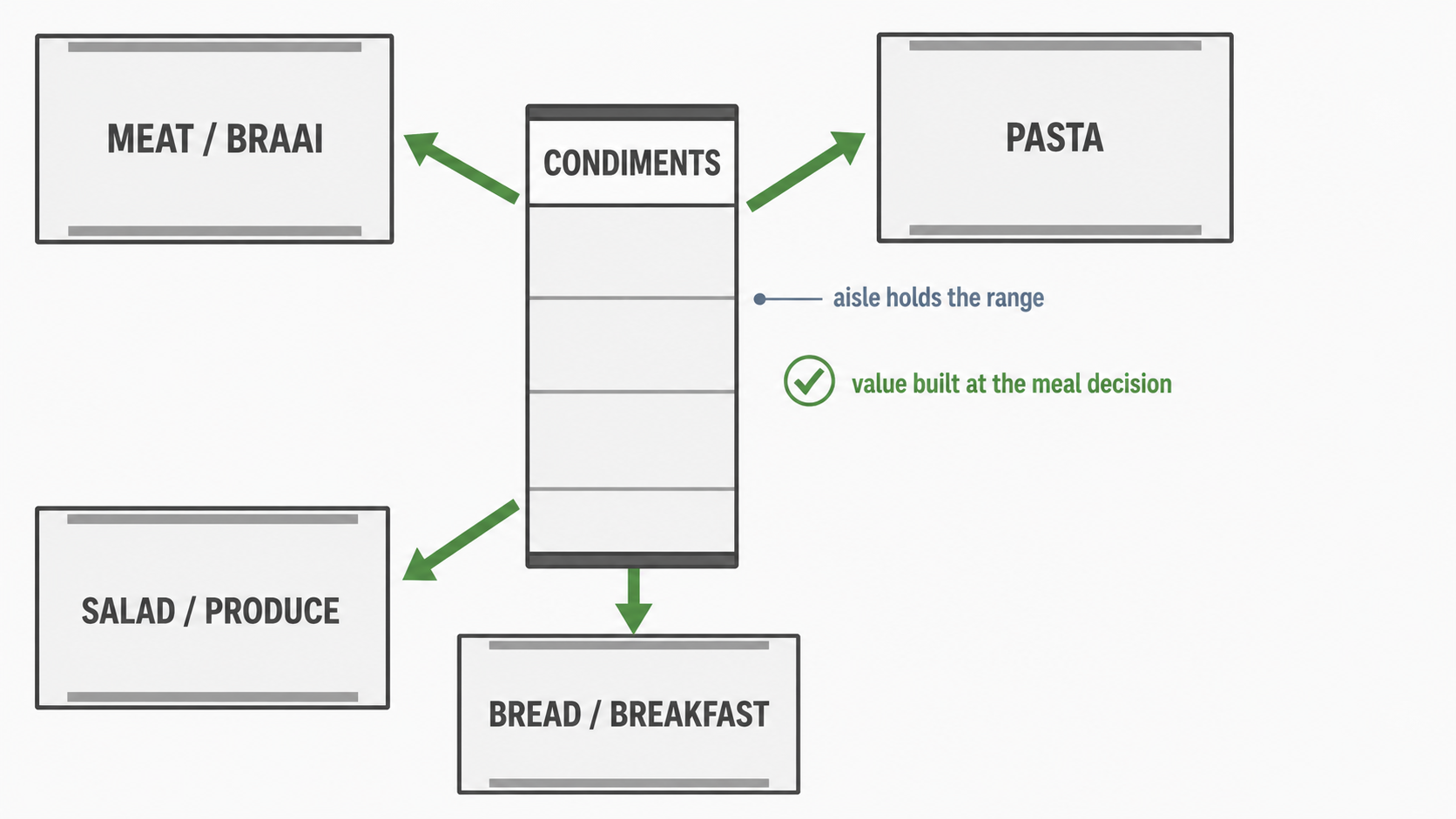
Condiments is a meal-completion category: its value is set by where it sits relative to the meals it finishes, not by the metres of shelf it gets.
The Sauce Aisle Doesn't Start a Basket. It Finishes One.
Almost nobody drives to the shop for ketchup. They come for the meat, the pasta, the bread, the salad — and the sauce, the marinade or the dressing goes in on the way, because it finishes the meal they have already half-decided on.
That one fact should change how the department is planned. Most stores plan condiments as a self-contained aisle: a run of gondola, blocked by category, sized on range, and judged on its own sales line. It looks tidy. It still leaves money on the shelf, because the decision to buy a sauce is rarely made in the sauce aisle. It is made at the meat counter, at the pasta, at the bread — and if nothing there points to the sauce, the second item never makes the basket.
Condiments is a meal-completion category. Plan it for the meals it finishes, not the metres it fills.
Shelf metres are not the lever. Position is.
The usual argument about condiments is about space — how many bays, how wide the run, whether the world sauces earn their block. That is the wrong first question. Giving a self-contained aisle more metres does not make a shopper want a marinade. Putting the marinade where they are already choosing the meat does.
The category punches above its footprint precisely because it is a high-attachment range. A jar of pasta sauce, a braai marinade, a salad dressing — each one only sells hard when it sits in the path of the meal it completes. So the planning order is: decide where condiments sits relative to the fresh departments and the meal decisions, plan the cross-aisle cues, and only then argue about the aisle itself.
That keeps the setup cost honest too. This is a low-cost department to build — no refrigeration, no drainage, lighting and power on standard modular gondola. The return doesn't come from spending more on the aisle. It comes from placing it well.
The basket is decided in another aisle
This is the July adjacency point, made as plainly as the category allows. Condiments completes meals across the store, so the work is cross-merchandising it into the aisle where the meal is being decided:
Sauce and marinade to the meat and braai. A marinade or a bold sauce beside the meat counter turns a cut of meat into a planned dinner. This is the strongest attachment in the store for this category — the shopper is already committed to the protein; the sauce is the easy yes.
Pasta sauce to the pasta. If a shopper is holding a bag of pasta, the sauce is a natural second item. Split them across the store and you rely on memory; sit them together and you catch the decision.
Dressing to the salad and produce. A dressing next to the leaves finishes the salad the shopper is already building.
Spread and jam to the bread and breakfast. The breakfast basket completes itself when the spread is on the route, not two aisles away.
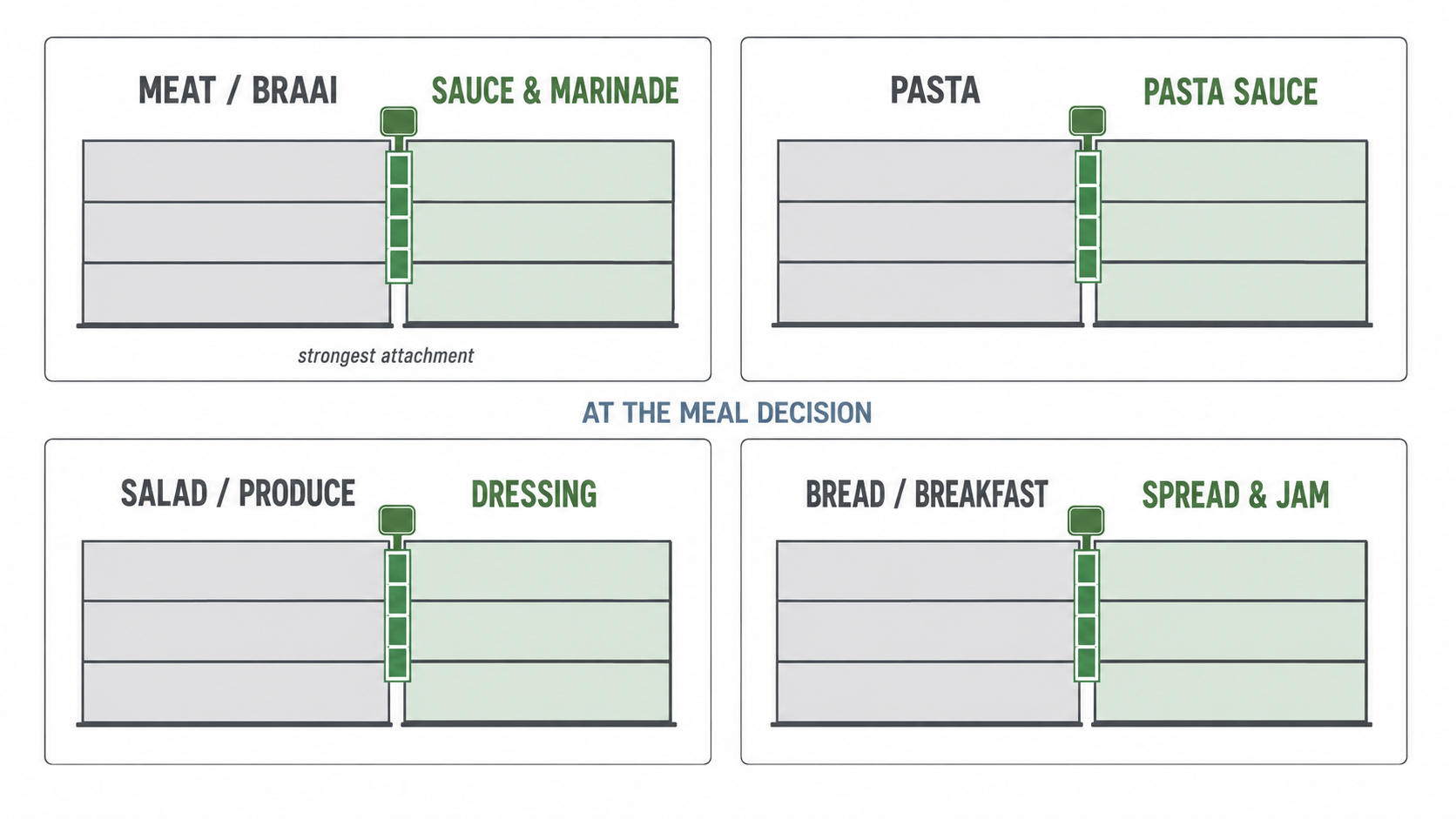
The basket is built where the meal is decided: a clip-strip or shipper at the meat, the pasta, the salad and the bread catches the second item.
The mechanism is a clip-strip or a shipper at the meal decision, not a bigger aisle. And it only works if someone owns it day to day — a marinade display next to the meat has to be replenished, dated and cleared like any other fresh-adjacent line, or it quietly turns into shelf clutter. Plan the cross-merchandising into the layout, with a clear owner, rather than improvising it after opening.
None of this means the aisle disappears. The shopper on a top-up mission still walks to the sauce aisle for a known ketchup, so it has to be shoppable — category-blocked, clearly signed, easy to navigate. But the aisle is where you hold the range. The basket is built where the meal is decided.
Protect the KVIs, or you lose the price trust
A handful of lines carry the whole category's credibility: ketchup, mayonnaise, the core table sauces. They are the known-value items — shoppers price-check them without thinking, so an empty ketchup facing does more damage than a slow week on world sauces. It reads as "this store runs short," and that doubt spreads well beyond the aisle.
So two rules sit above everything else in condiments. Keep the KVIs bold, well-priced and in stock — protect those facings and replenish them off-peak so it isn't happening across a busy aisle. And get the price and unit-price ticket layer flawless before you add any clever mission signage. A "Braai sauces" or "Pasta night" cross-sell card earns its place only once the shopper can trust the price in front of them.
Two quiet shrink leaks: glass and dates
Condiments looks low-risk, and on labour and energy it is. But it loses money in two specific ways, and both are design decisions before they are operational ones.
The first is glass. This is a glass-heavy range — jars and bottles — with a high breakage risk. The fix is simple and it belongs on the drawing: load the glass and the heavier jars low. Glass high, or on a tall run handled without care, breaks in store and on the shelf, and that shrink rarely shows up cleanly in a report — it just erodes the margin.
The second is dates. The premium, world and artisan lines are the trade-up margin, but they are slow movers on a long-dated range, which is exactly the profile that quietly expires if the space outruns the turnover. Run strict FIFO, mark down short-dated stock on a routine, and size the premium block to how fast it actually sells — not to how good it looks on the plan. One more detail worth a line on the reflected ceiling plan: keep oils off hot display lighting, or they degrade before they sell.
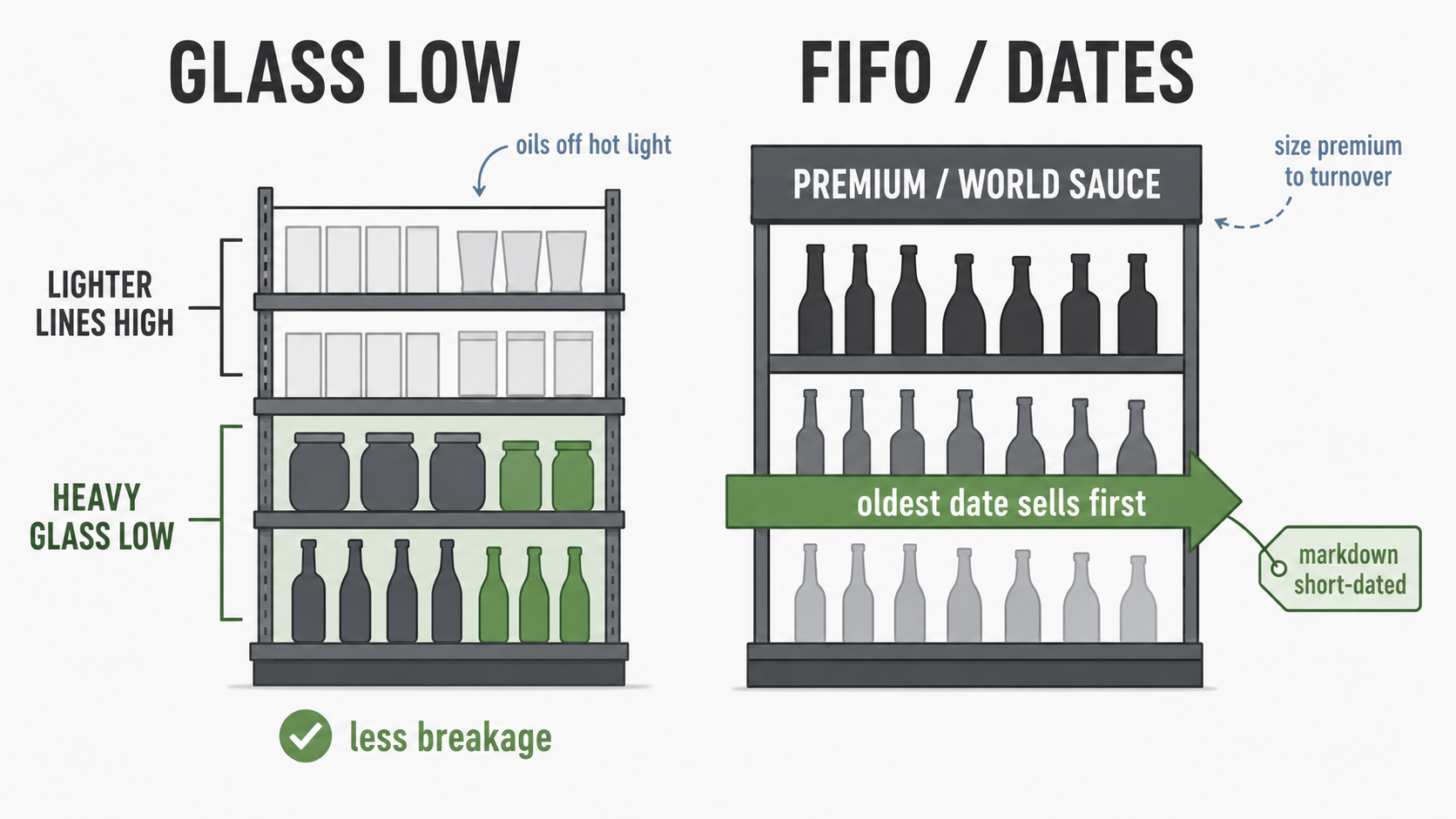
Two leaks the layout can prevent: glass and heavy jars loaded low, and strict FIFO with markdown on the slow premium and world lines.
Judge the department on margin after shrink, labour and energy — not gross margin. For condiments, "after shrink" mostly means after date and breakage, and both are things the layout can prevent.
The takeaway
Draw two things you probably are not drawing today. First, the cross-aisle attachments — where the sauce, the marinade, the dressing and the spread meet the meals they finish, with a named owner for each. Second, the shrink discipline — glass low, FIFO on the slow premium lines, KVIs protected. Do those, and a quiet aisle of jars stops selling single jars and starts completing meals across the store.
The sauce aisle doesn't start a basket. Planned properly, it finishes plenty of them.
Related reading (place near the end of the article):
The aisle condiments most often cooks alongside — How Supermarkets Can Turn the Spice Section Into a Meal-Planning Department
Where the basket starts, so you can see where condiments finishes it — Fresh Produce Should Start the Basket, Not Just Fill the Department
The counter the strongest sauce attachment sits beside — Supermarket Butchery Design Must Build Customer Confidence
Planning or revamping a store?
A quick layout review can check that condiments is placed to finish meals across the store — not just given a tidy aisle of its own. Book a layout review with Grove Retail Design, or get in touch.
Where should condiments and sauces sit in a supermarket layout? Condiments usually sits centre-store on ambient gondola, category-blocked so it is easy to navigate. But placement is only half the decision. Because it is a meal-completion category, the bigger gains come from cross-merchandising it into the fresh aisles where the meal is decided — sauce and marinade at the meat, pasta sauce at the pasta, dressing at the salad, spread at the bread.
How do you build a bigger basket from the sauce aisle? Not by making the aisle bigger. By placing the category where the meal decision happens. A clip-strip or shipper of marinade beside the meat counter, or pasta sauce beside the pasta, catches the shopper mid-decision and adds the second item without adding a single shopper to the door — provided someone owns the display and keeps it replenished and dated.
Why do premium and world sauces lose money? They are the trade-up margin, but they are slow movers on a long-dated range, so they quietly expire when the shelf space outruns the turnover. The controls are strict FIFO, a routine markdown on short-dated stock, and sizing the premium block to how fast it actually sells.
Why is glass a design issue in the condiments aisle? Condiments is a glass-heavy range with a high breakage risk. Loading glass and heavier jars on the lower shelves — and handling them with care — cuts breakage shrink that rarely shows up cleanly in a sales report but steadily erodes margin.
What matters most in the condiments aisle? Protecting the known-value lines. Ketchup, mayonnaise and the core table sauces carry the category's price trust, so an out-of-stock on those does more damage than a slow week on speciality lines. Keep them bold, well-priced and in stock, and get the price ticket layer right before adding mission signage.
