What Does It Cost to Fit Out a Supermarket in South Africa?
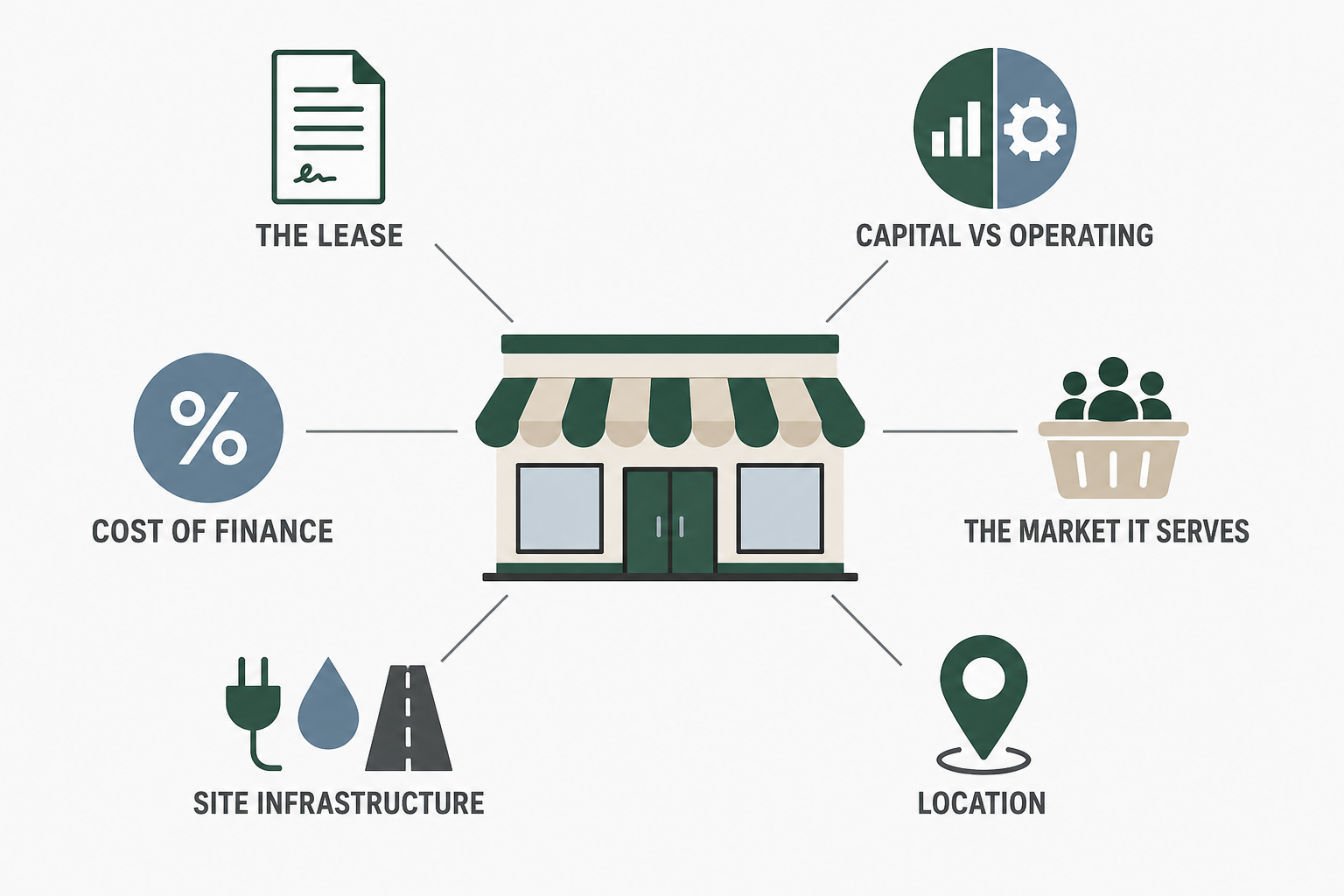
Six things set the cost of a supermarket. A price per square metre ignores all of them.
Anyone who quotes you a rand-per-square-metre figure for a supermarket before they've read your lease is guessing. It's the first question every owner asks, and it's the one with no honest short answer — because a supermarket fit-out isn't a price. It's the sum of a handful of decisions that usually haven't been made yet.
That's not a dodge. Two identical stores — same size, same brand, same street — can cost the tenant millions apart, because one landlord handed over a serviced shell and the other handed over four walls and a roof. The floor area is the same. The cost is not even close.
So instead of a number that will mislead you, here's the more useful thing: the six factors that actually set your cost. Pin these down and you have a real budget. Skip them and all you have is someone else's guess.
One thing up front. Grove Retail Design sells design and documentation, not the fit-out. We don't quote the refrigeration, the equipment or the building work. That's exactly why we can be straight about this — there's no fit-out invoice on our side that a bigger or smaller number would help.
1. The lease: who pays for what
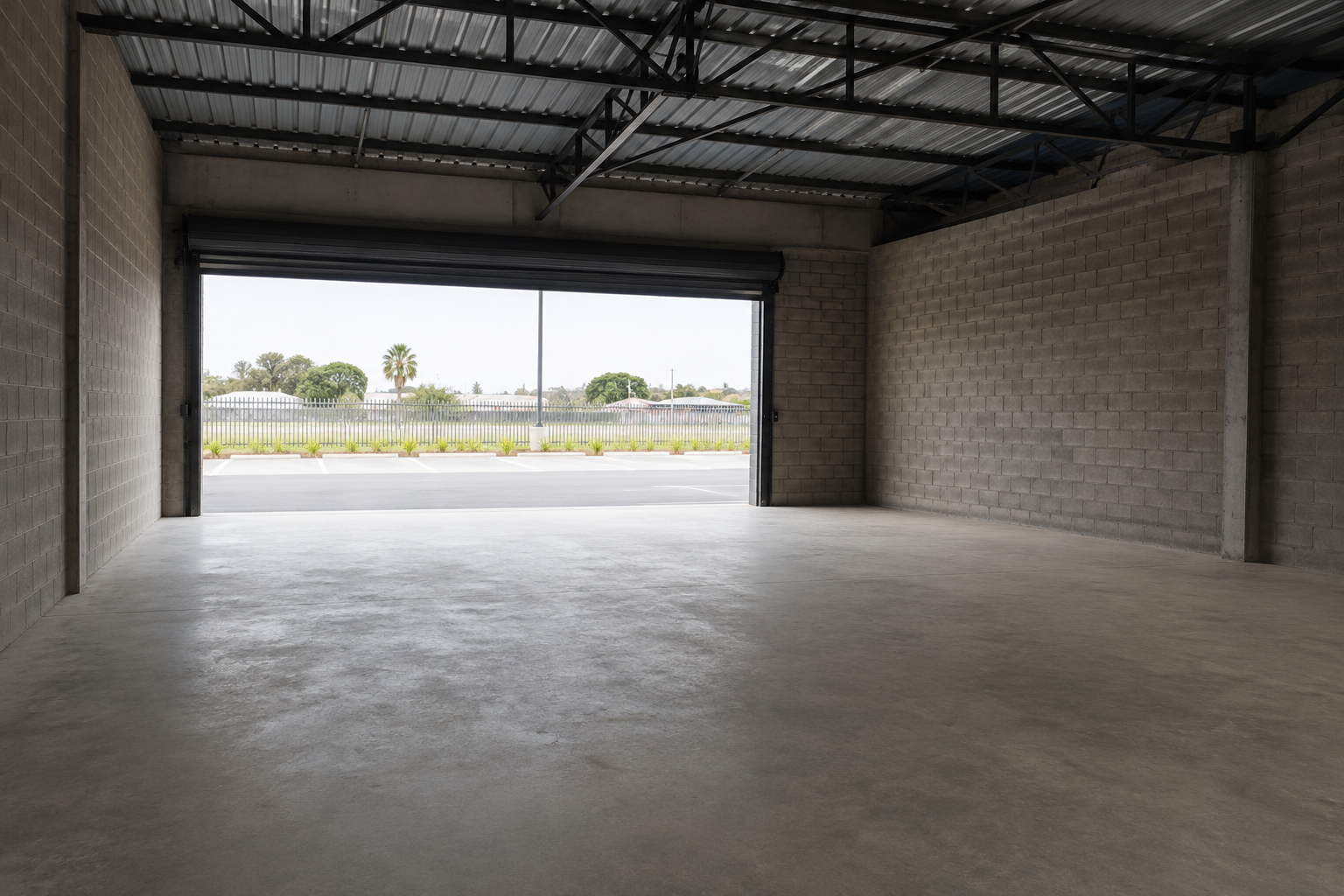
Where the landlord's scope stops and yours begins is the biggest number in the budget — and it's written in the lease, not the drawing.
Start here, because nothing moves the number more.
What the landlord hands over varies enormously. It might be a bare shell — a slab, four walls and a roof — with power stopping at the boundary and no water, drainage or shopfront. It might be a serviced shell with the services run in, the floor screeded and the storefront built. It might come with a tenant installation allowance — a contribution the landlord pays towards your fit-out. Every one of those lines the landlord funds comes straight off the tenant's number.
This is why floor area tells you almost nothing on its own. The same store under a generous lease and a bare-shell lease can differ by millions on the tenant's side. Before you budget a single rand, read the lease line by line and mark exactly where the landlord's scope stops and yours begins. Get that boundary wrong and every figure after it is wrong too.
2. CAPEX or OPEX: what you own versus what you rent
The next trap is assuming the whole fit-out is capital you fund upfront. Often it isn't.
Refrigeration bought outright is a capital cost. The same refrigeration taken on a rental or supply agreement is a monthly operating cost and barely touches your upfront number. Landlords frequently amortise a tenant installation into the rent, so what looks like their spend is really yours, spread over the lease. The same store can be a big capital number with a light monthly, or a small capital number with a heavier monthly — and which one you choose is a cash-flow decision as much as a cost one.
So "what does it cost" splits into two questions: what do you pay on day one, and what do you carry every month after. Decide that structure deliberately. It changes what the word "cost" even means for your store.
3. Where the cost of finance falls
If any of the fit-out is funded — a bank facility, supplier terms, or a landlord amortisation — the cost of that finance is part of the true cost of the store, and it never shows up on a fit-out quote.
It's easy to leave out because it sits in a different column. But a store funded over five years costs meaningfully more than the same store paid for in cash, and where the interest lands — on your books as capital finance, or buried in the rent as an amortised TI — changes the picture again. Count it, and know which column it's in.
4. The market the store serves
A store built for a high-LSM customer and a value store of the same floor area are not in the same budget, and they shouldn't be.
The target shopper sets the standard. A premium store carries better flooring, more lighting, a wider fresh and specialist offer, more brand and finish — because that's what its customer expects and what makes the store trade. A value store spends leaner on all of it, on purpose, because its customer is buying on price and the money is better left in the margin. Same square metres, very different spec, very different cost. Spec follows the shopper, and the spec sets the number.
5. The site's infrastructure — and whose problem it is
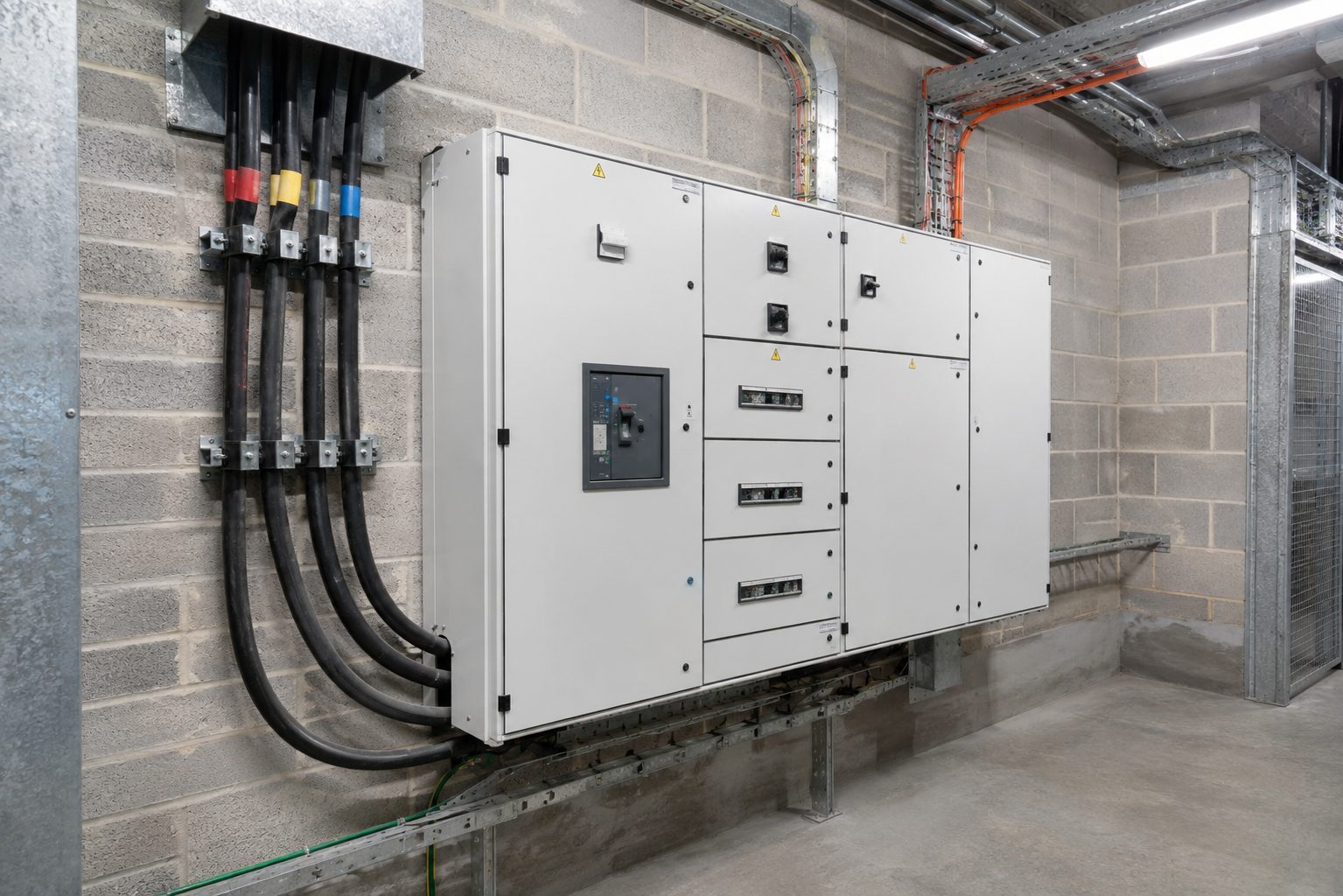
Three-phase power, water, drainage. If the site's short and the lease says it's your problem, that's a cost no rule of thumb includes.
A per-m² figure quietly assumes the site is ready to trade. Plenty aren't.
Does the site have the electrical capacity a supermarket needs — three-phase power, enough of it, for the refrigeration and the plant? Is there adequate water and drainage? Is it cold-chain ready? If the answer is no and the lease makes it the tenant's problem, upgrading it is a major cost that no rule-of-thumb figure includes. This is one of the biggest hidden traps in a fit-out budget, and it comes straight back to the lease: infrastructure is only your cost if the lease says it is. Check what's there, and check whose problem the gap is.
6. Location: transport and labour
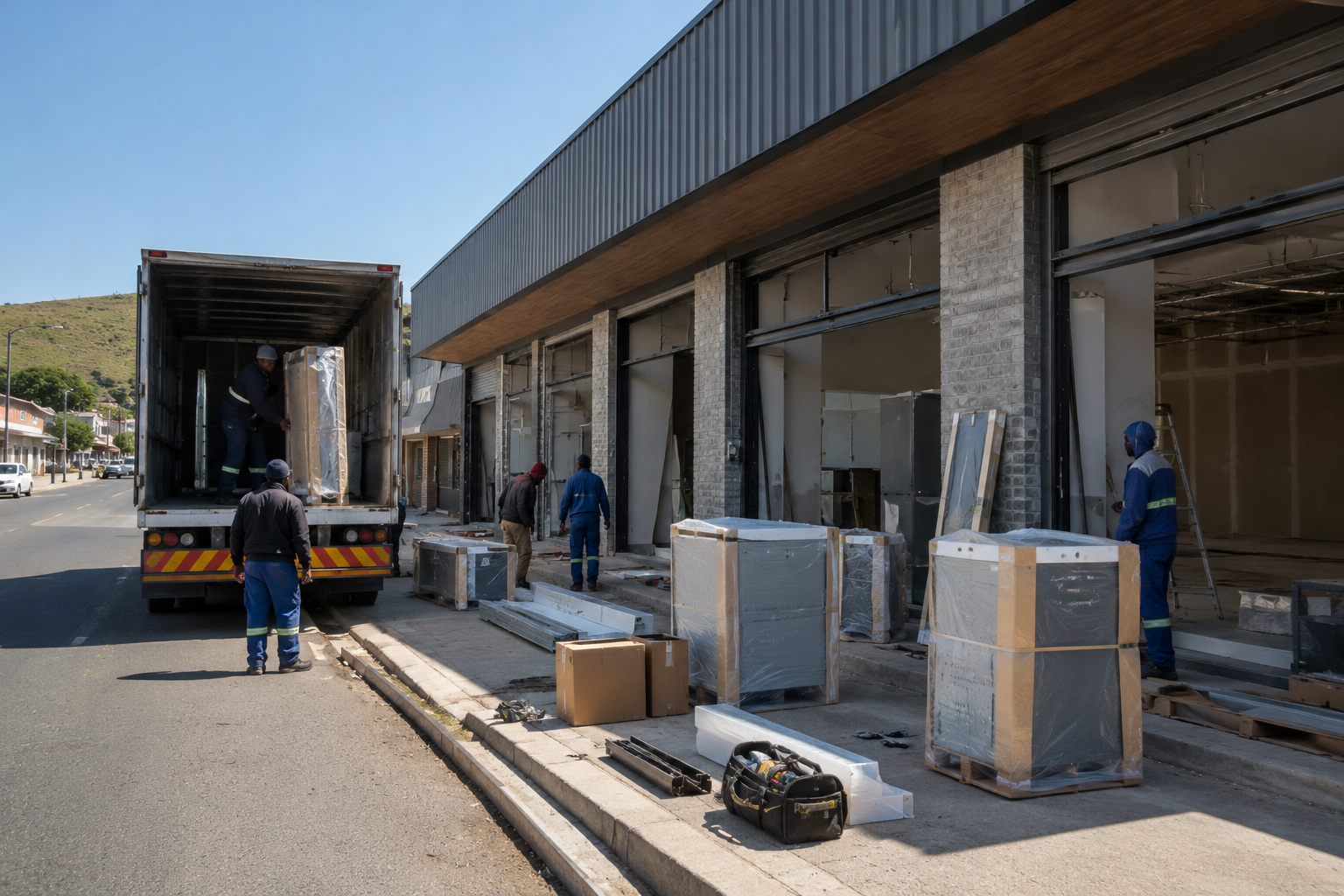
Freight, installer travel and standing time — a store far from its suppliers costs more to fit out before a single fixture is different.
The last one is geography. The same store costs more to fit out in a remote town than in a metro, and more again across a border.
Equipment has to be freighted to site. Installers and specialist trades have to travel, and on a distant job that means travel time, accommodation and standing time on top of their rate. Local labour rates vary. A store hours from its suppliers, or in another country, carries transport and installation costs a city store never sees — before a single fixture is different. Location doesn't change what goes into the store; it changes what it costs to get it there and put it in.
So what do you do instead of guessing?
You scope it. A real number exists only once the six above are pinned down: where the lease boundary sits, what's capital and what's monthly, where the finance falls, what spec the market demands, what the site already has, and what location adds. Work through those and the cost stops being a guess and becomes a budget you can trust.
That scoping is a design and planning exercise, not a quote. It's laying out the store, deciding the spec against the market, reading the lease and the site, and only then pricing it with the suppliers. Do it in that order and the number is real — and usually lower than the panic figure, because scoping is where the waste comes out before anyone builds it in.
The takeaway
There is no per-square-metre price for a supermarket, and anyone who gives you one hasn't read your lease. Before you trust any number, pin the six things that set it: who pays for what in the lease, what's capital versus monthly, where the finance sits, what standard the market demands, what the site already has, and what the location adds. A figure that ignores those isn't a budget, it's a hope. Scope it properly first, and the cost becomes something you can actually plan around.
Get the scope right and the number looks after itself.
Related reading:
Why most shopfitting is money you don't need to spend — most-supermarket-shopfitting-is-money-you-dont-need-to-spend.
How the layout controls the spend — How to Lay Out a Store to Drive Sales.
Where the cost gets specified and status-controlled — Concept Design vs Working Drawings in Retail Projects.
Planning a store and need a real budget instead of a guess?
A layout and scoping stage pins the lease boundary, the spec and the site before anyone quotes — so you budget off your store, not a rule of thumb. Start with a layout review with Grove Retail Design, or get in touch.
FAQ
How much does it cost to fit out a supermarket in South Africa? There is no single figure or reliable per-square-metre price, and any answer that gives you one has ignored the things that actually set the cost. A supermarket fit-out is decided by six factors: what the lease makes the landlord's cost versus the tenant's; whether items are bought as capital or taken as a monthly operating cost; where the cost of finance falls; the market the store serves, because a high-LSM store carries a far higher spec than a value store of the same size; the infrastructure already on site, such as power, water and drainage, and whose problem any shortfall is; and the location, which sets transport and installation labour costs. Pin those six down and you have a real budget. Until then, any number is a guess.
Why is there no fixed cost per square metre for a supermarket fit-out? Because two stores of identical size can cost the tenant millions apart. A per-square-metre figure assumes the lease scope, the site infrastructure, the spec and the location are all the same, and they never are. One landlord hands over a serviced shell with a tenant installation allowance; another hands over a bare shell with power stopping at the boundary. One store serves a premium customer and carries a premium spec; another runs lean for a value shopper. Floor area is the same; cost is not. Use per-square-metre as a rough sanity check at most, never as a budget.
Who pays for a shop fit-out — the landlord or the tenant? It depends entirely on the lease, and it's the single biggest factor in the cost. The landlord might provide a bare shell, a serviced shell, or a shell plus a tenant installation allowance that contributes to your fit-out. Everything the landlord funds comes off the tenant's number. Read the lease line by line and mark exactly where the landlord's scope ends and yours begins before you budget anything — get that boundary wrong and every figure after it is wrong too.
Is a supermarket fit-out a capital or an operating cost? It can be either, and deciding which is a cash-flow decision as much as a cost one. Refrigeration bought outright is a capital cost; the same refrigeration on a rental or supply agreement is a monthly operating cost. Landlords often amortise a tenant installation into the rent, turning what looks like their spend into yours, spread over the lease. The same store can be a large upfront number with a light monthly, or a smaller upfront number with a heavier monthly. Decide the structure deliberately.
Does the target market change the fit-out cost? Yes, significantly. The target shopper sets the standard. A store built for a high-LSM customer carries better flooring, more lighting, a wider fresh and specialist offer and more finish, because that is what its customer expects and what makes it trade. A value store spends leaner on purpose, because its customer buys on price and the money is better left in the margin. Same floor area, very different spec, very different cost.
How do I get an accurate cost for my supermarket? Scope it before you quote it. Pin the six factors — the lease boundary, capital versus operating, the finance, the market spec, the site infrastructure and the location — then lay the store out and price it with suppliers against that scope. That order matters: scoping first is where the waste comes out, so the real number is usually lower than the panic figure. A design and layout stage does exactly this, and because Grove Retail Design sells design and not the fit-out, the costing is impartial.
