Get a Basket in Their Hand: Planning Basket Stands That Lift Items per Visit
Half Your Shoppers Carry Nothing: Where to Put the Basket Stands
Direct answer: Put two basket stands inside the door on the side shoppers naturally turn, at least one mid-store beside the bakery, hot foods or deli, and a return at the tills. Half of shoppers carry nothing and buy about two items. Those with a basket buy about six and a half. Size each stand to look full.
A shopper comes in for bread. By the time they reach the bakery they are holding a loaf, a milk and a packet of rolls, and the next thing they pick up means putting one of those down. At that point many of them stop shopping and head for the tills.
The fix is cheap and it sits on the drawing: a basket in the hand before the hands run out.
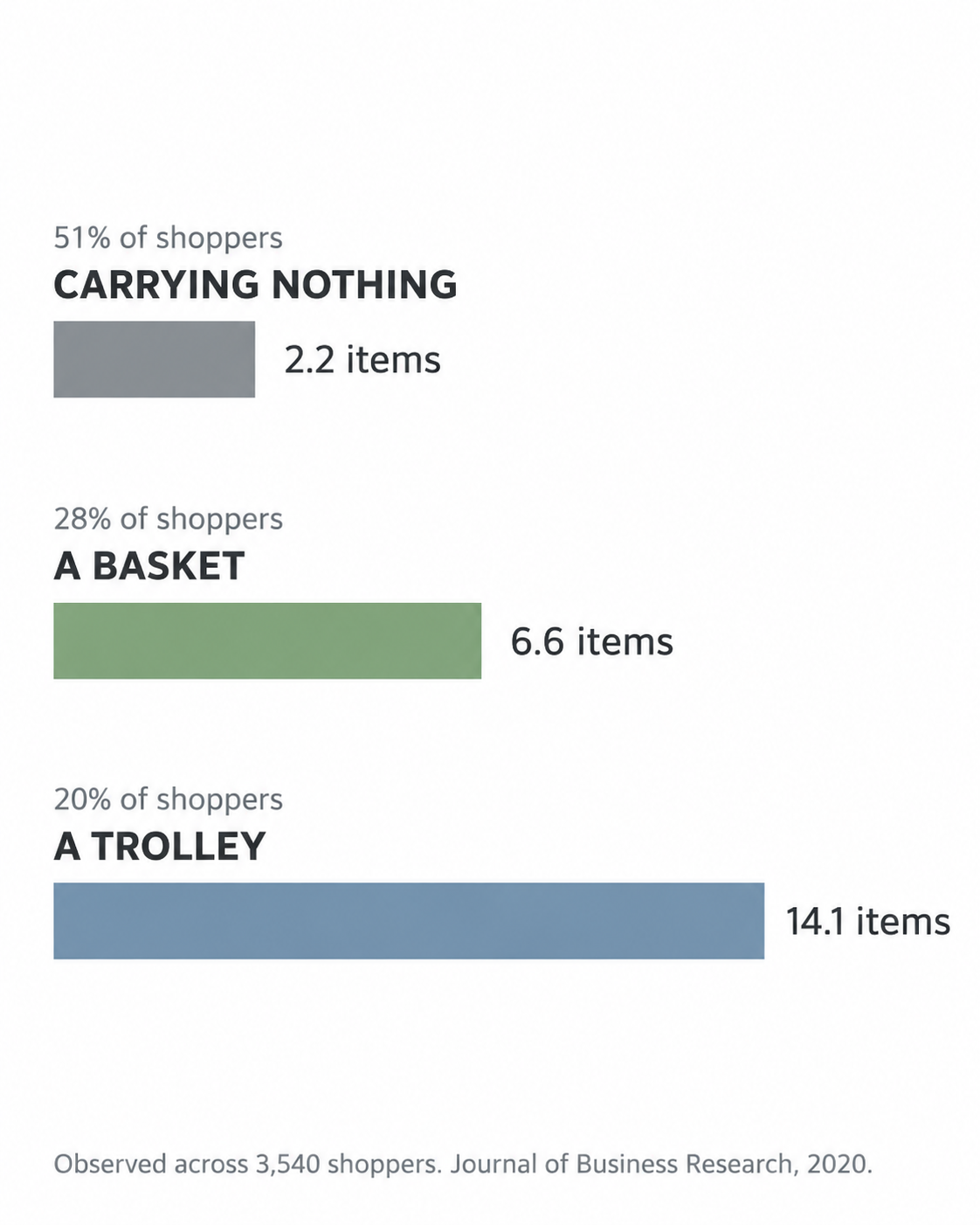
Half of every store's shoppers carry nothing and buy about two items. A basket takes that to about six and a half.
What shoppers carry decides what they buy
An observational study of 3,540 supermarket shoppers (Journal of Business Research, 2020) recorded what each shopper carried and what they bought. The split is the useful part.
What they carry - Share of shoppers - Items bought - Time in store Nothing - 51% - 2.2 -3.3 min A basket 28% 6.6 7.1 min A trolley 20% 14.1 13.4 min
Half of every store's shoppers carry nothing and buy about two items. A shopper with a basket buys about three times as many. The shoppers with baskets also covered more of the store: 22% of it against 14% for the shopper with nothing.
The study watched shoppers and cannot prove that the basket caused the extra items. Some of those shoppers arrived with a bigger shop in mind. But a shopper with free hands has little reason to keep adding, and a basket costs less than a metre of shelving. That is a cheap thing to get right.
Where the stands go
Three positions, each doing a different job.
1. Two stands inside the door, on the side the shopper naturally turns. Most shoppers pick up equipment in the first few metres. A stand behind them, or on the far side of the entrance, is passed before they have decided what they need. Put it on the side of their natural turn, in the clear space just inside, so the basket is in the hand before the first department. Keep it clear of the trolley bay so the choice between a basket and a trolley is visible at the door. Link this to how you plan the first few metres.
2. At least one stand mid-store, where a shopper with nothing runs out of hands. This is the stand that earns its cost. Bakery, hot foods and deli are the usual place. The shopper who came in for bread is already carrying three things, and this is where they stop. A stand within reach of that counter turns a shopper who was about to leave into one who carries on. See Bakery department design and Deli department design for how those departments are planned.
3. A return at the tills. Without one, baskets leave with the shopper and end up in the car park. A return at the checkout end puts them back where the next shopper needs them, and saves a staff member walking the apron. See Checkout is the last metre of selling for the front end.
A stand that looks empty does not get used
Shoppers read a nearly empty stand as out of baskets and walk past it. Standing stock is the display.
That changes how you add stands. More stands should mean smaller stands, not more baskets spread thinly. Divide the baskets you expect to have standing by the number of stands, and size each stand to look full at that number. A stand built for 20 that holds 11 reads as empty, and it undoes the reason it was added.
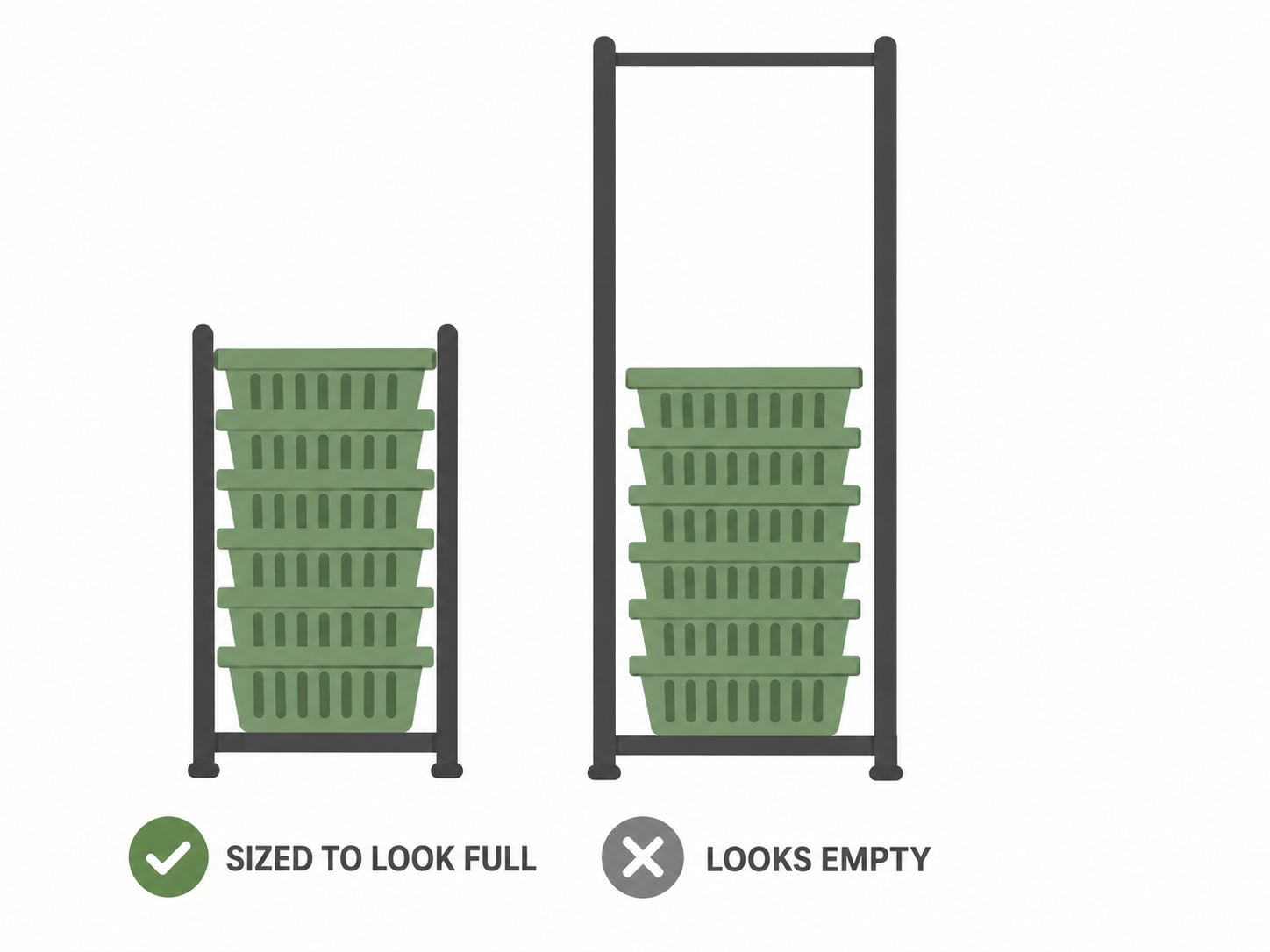
A stand sized to look full gets used. The same baskets in an oversized stand read as empty.
Which basket, and how many
Size. A 22 litre basket is a sound default because it stays carryable when full. A 28 litre basket suits a larger format or a trade that buys heavy but shallow. A 28 litre basket of tins weighs close to 15 kg, and a shopper who puts a basket down stops shopping. If they need more than 22 litres, they should have taken a trolley, and the front of the store should make that choice obvious at the door. A wheeled basket of 54 to 68 litres suits a long store, an older catchment or a strong month-end bulk trade.
Count. The stands set the fleet, not the shopper numbers:
Baskets = (stands × stand capacity) × 0.9, checked against circulation
Baskets turn over about twice as fast as trolleys, a 7 minute visit against 13, so far fewer are out in circulation than the shopper split suggests. Order 15 to 20% over for breakage and walk-off.
Worked example. A 780 m² supermarket with 40 trolleys draws four stands of about 20 baskets each, which is 80 spaces. With about 16 baskets out in circulation, a fleet of about 70 keeps every stand stocked. Round up. Baskets are the cheapest fixture in the store and the one that disappears.
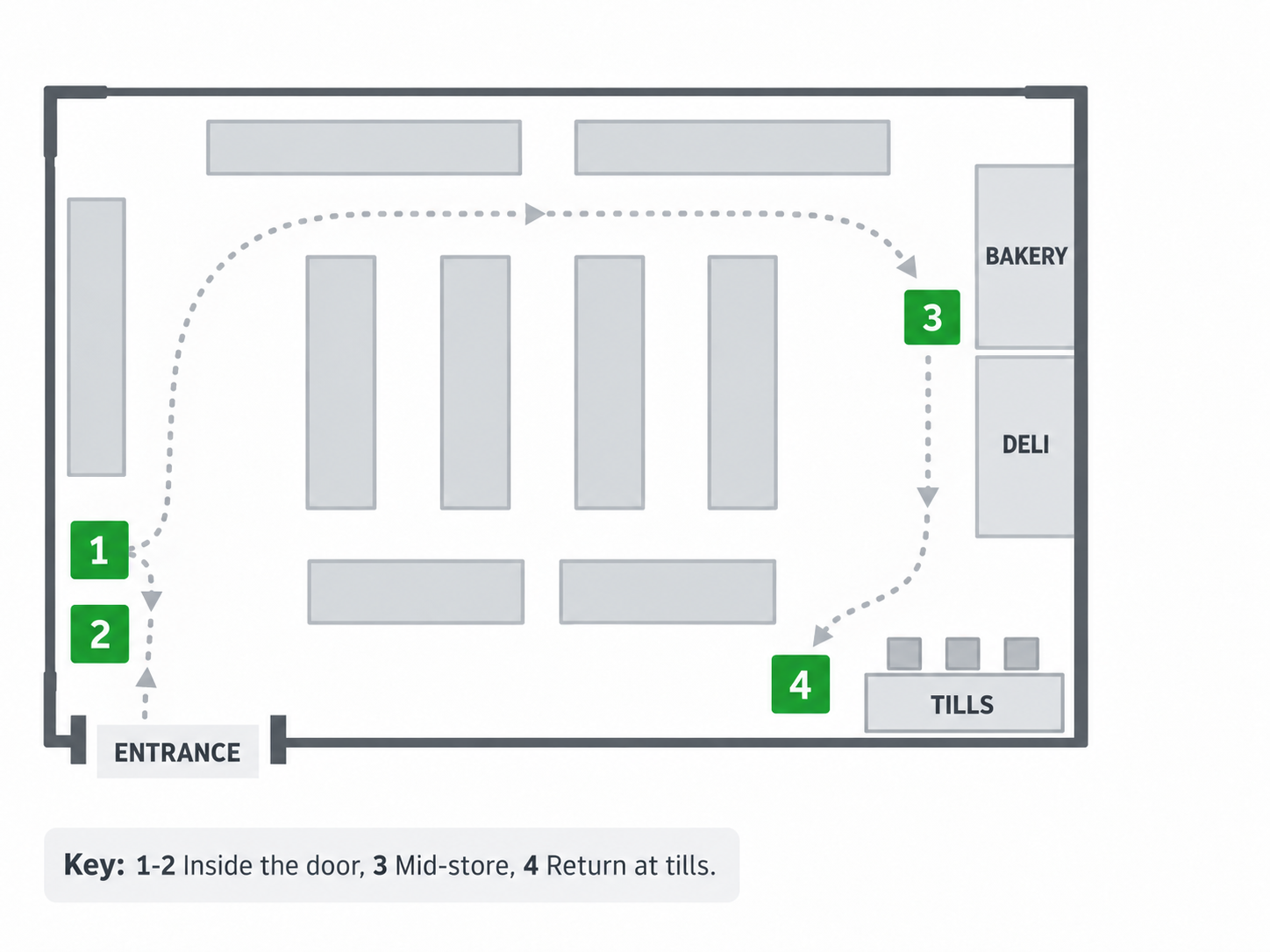
Three positions: two stands inside the door, one beside the bakery and deli, one return at the tills.
What the drawing has to carry
Basket stands positioned as merchandising positions, not storage: entrance, at least one mid-store, and a return at the tills. Three positions minimum.
Stand capacity written on the drawing, so the fleet can be calculated rather than guessed.
The basket size named on the fixture schedule, not "shopping basket".
The takeaway
Open your current plan and find the basket stands. If there are not three positions on it (two inside the door, one mid-store near the bakery or deli, one return at the tills), that is the first change to make. Then size each stand to look full.
Related reading :
The checkout is the last metre of selling, and most stores size it wrong
The first few metres of produce decide how the rest of the store sells
More space doesn't mean more sales: how to split a supermarket floor by department
How to lay out a store to drive sales: plan the route, not the rooms
Planning a new store or a refit? A layout review reads the entrance, the route and the front end off your plan, including where the basket stands go. Book a store layout review with Grove Retail Design, or get in touch.
FAQ
Where should basket stands go in a supermarket? Put two stands just inside the door on the side shoppers naturally turn, at least one mid-store near the bakery, hot foods or deli, and one return at the tills. The mid-store stand matters most, because that is where a shopper with nothing runs out of hands.
How many shoppers use a basket? In an observational study of 3,540 supermarket shoppers, 51% carried nothing, 28% used a basket and 20% used a trolley. Shoppers with a basket bought about 6.6 items, against about 2.2 for those carrying nothing. Half of every store's shoppers are therefore a basket away from a bigger shop.
What size basket should a supermarket use? A 22 litre basket is a sound default because it stays carryable when full. A 28 litre basket of tins weighs close to 15 kg, and a shopper who puts a basket down stops shopping. Wheeled baskets suit a long store, an older catchment or a strong month-end trade.
How many baskets does a supermarket need? Size the fleet from the stands, not the shoppers. Multiply the number of stands by the capacity of each, then by 0.9, and check it against circulation. Order 15 to 20% extra for breakage and walk-off. Baskets are the cheapest fixture in the store, so round up.
Why does a basket stand that looks empty not get used? Shoppers read a nearly empty stand as out of stock and walk past it. Standing stock is the display. If you add stands, make each one smaller and size it to look full with the baskets you have, rather than spreading the same baskets thinly across more stands.
