The Dairy Mistake You Can't See From the Shop Floor
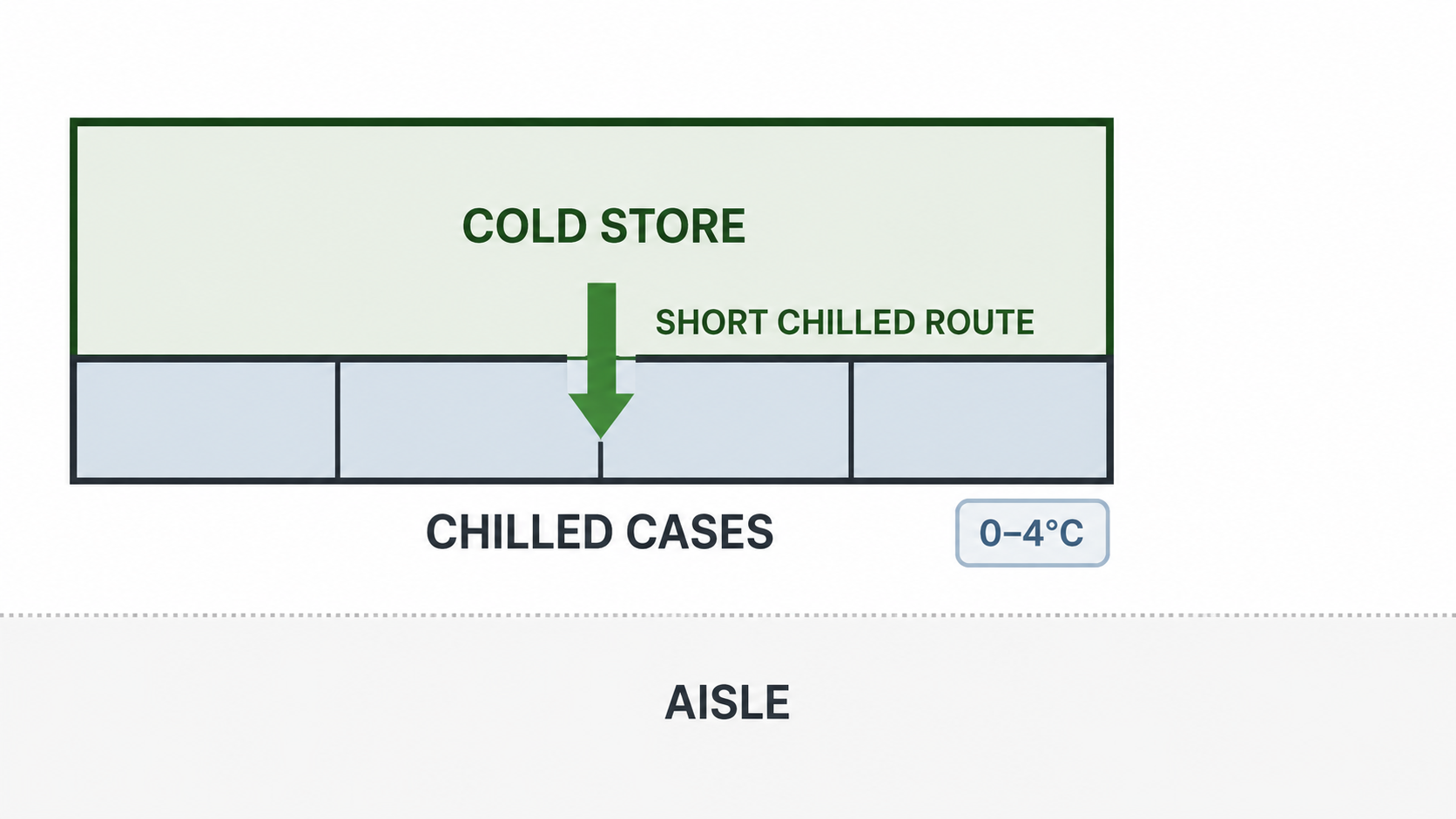
Cold store behind cases.
Walk a supermarket dairy department as a customer and it looks simple: a long run of chilled cases, milk and yoghurt at the front, cheese and butter along the wall. Full cases, cold product, clear prices. Nothing to plan that a fridge supplier can't sort out.
That is exactly why dairy is so often planned badly. The part of dairy that decides whether the department makes money is the part the customer never sees — the route the product takes from the back of the store to the case it ends up in. Get that route wrong and the cases still look fine on opening day. The cost shows up later, every week, as markdown, spoilage and a wet floor.
Dairy is one of the most-visited departments in the store. Milk and eggs drive repeat trips, so dairy works hard for frequency. But it does that on the most energy-hungry refrigeration in the building, with the shortest shelf life of any staple. That combination is unforgiving. Dairy is a cold chain with a price ticket, and the losses leak from the gaps in the chain.
Where dairy actually loses money
Dairy shrink is rarely dramatic. It does not arrive as one big write-off. It leaks a little every day, and almost all of it traces back to the same place: the distance and time between the cold store and the case.
When that gap is too long, four things go wrong in sequence. Product warms on the trip from store to case, so the cold chain breaks before the customer ever touches it. Warm product spoils faster, so dates run down quicker than the range was planned for. To keep cases looking full, staff over-stock them, which breaks date rotation and pushes older stock to the back where it expires. And the temperature swings drive condensation, which ends up as standing water on the floor at the cases — a slip risk and a sign the chain is failing.
None of these show up in a photo of the opening-day department. They show up in the date-expiry markdown report three months later, and in an electricity bill that is higher than it needed to be because the cases are fighting a longer, warmer route than they were sized for.
The cold-room decision sits inside the wider system choice — see How to Choose a Supermarket Refrigeration System.
The decision that prevents all of it
There is one layout decision that protects against the whole chain of failures above, and it has to be made early — before the slab is poured and the services are fixed.
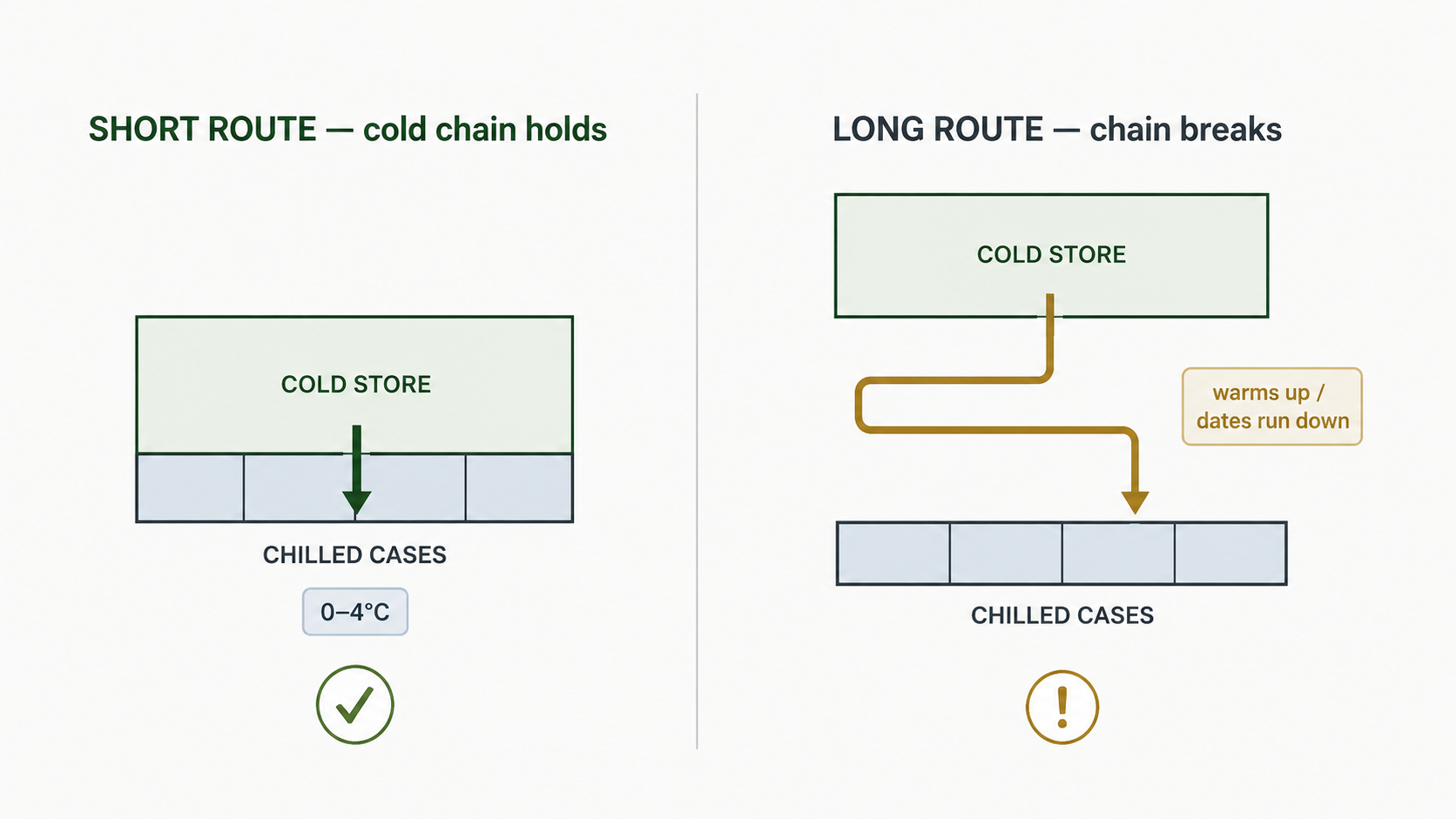
Short route vs long route.
Put the cold store directly behind the case run.
When the chilled holding sits immediately behind the cases, product moves from store to case over a short, cold, protected route. It does not cross a warm aisle. It does not wait on a trolley. The cold chain stays unbroken because there is barely a gap for it to break in. Replenishment happens from behind or beside the case rather than across the customer aisle, which keeps the route short and keeps staff out of the shopper's way.
This sounds obvious written down. It is routinely lost in practice because the cold store gets placed wherever there is room left over once the sales floor is set — across a corridor, around a corner, sometimes on the far side of the back-of-house. Every metre and every turn added to that route is a metre and a turn where product warms and dates run down. The position of the cold store is not a back-of-house convenience. It is a margin decision, and it is cheap to get right on a drawing and expensive to fix once the refrigeration and drainage are in the floor.
Replenish from the back so the oldest date sells first
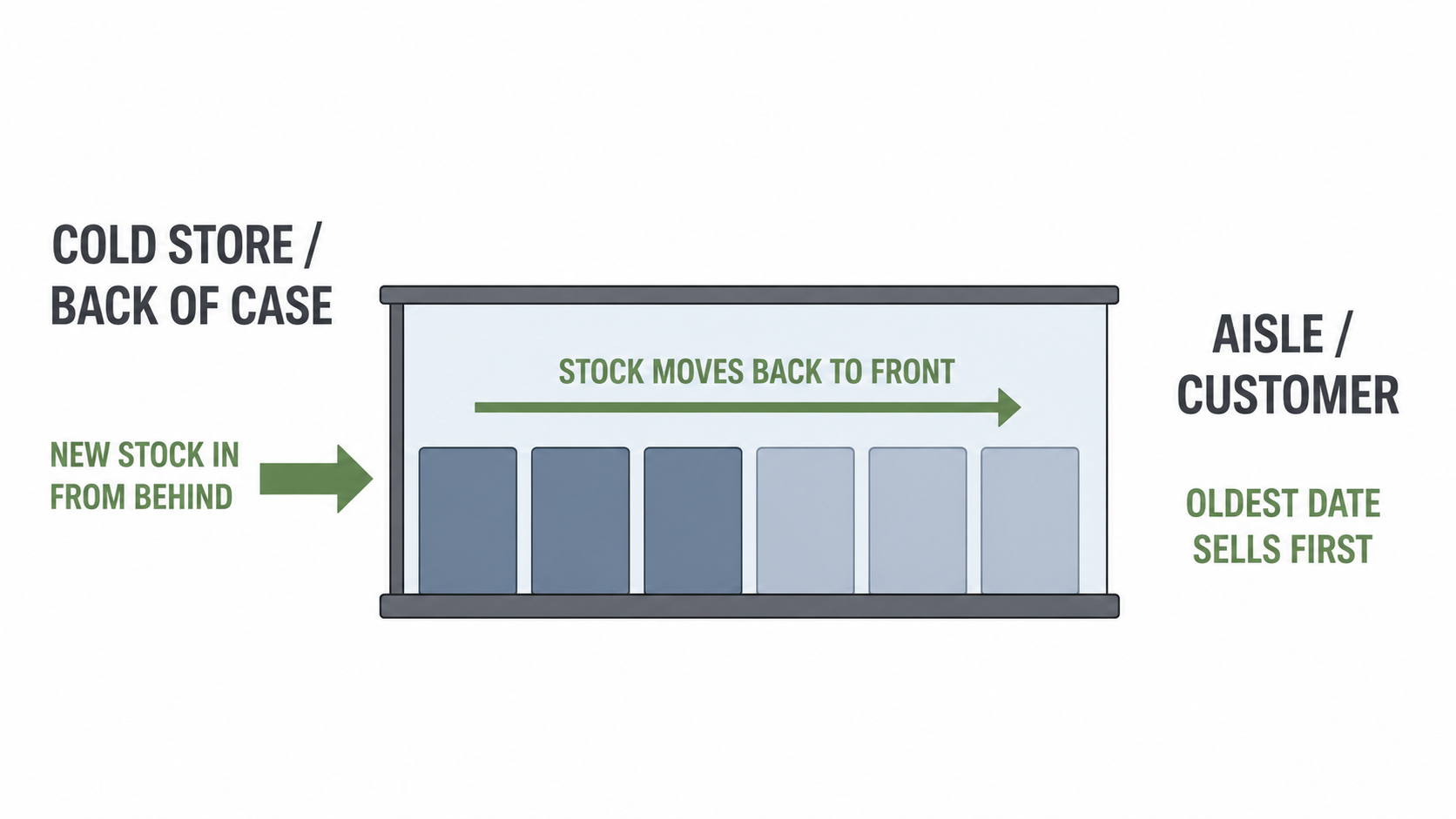
Replenish from behind, oldest date first.
A short route only protects margin if rotation rides on top of it. The replenishment path should load cases from the back — first in, first out — so the oldest date is always the next one a customer reaches. When cases are filled from the front, or over-stocked to look generous, fresh stock buries old stock and the markdown follows automatically.
Sizing matters here too. Cases sized to frontage rather than to how fast the line actually sells will always be over-held, and over-held dairy expires. Fullness should come from frequent replenishment off a short route, not from packing more product than the line turns over.
What to lock before the slab
The reason this is a planning issue and not an operations issue is timing. Refrigeration load, condensate drainage positions and the power for the cases all have to be confirmed before the floor is poured. If the cold store moves after that, or the route turns out longer than the cases were specified for, the fix means re-laying slab and re-routing services — the most expensive way to correct a decision that cost nothing on the layout.
Before finishes close, a dairy layout should have these settled:
• Cold store directly behind the cases, with a short, protected chilled route from store to case.
• A back-of-case replenishment route that loads FIFO so the oldest date sells first.
• Cases sized to turnover, not to frontage, so stock is not over-held and expired.
• Condensate drainage — drain positions and falls drawn at every case, so water never reaches the floor.
• Refrigeration sized to peak load, with temperature monitoring at the cold store and the cases.
A quick test for your own dairy
If you are looking at a dairy layout — new build or refit — ask one question: can the plan show where product is received, where it is cold-stored, and how it gets to the case without warming up or crossing a warm aisle? If the route is short and drawn, the department is on track. If the cold store is "somewhere at the back" and the route is long or unclear, the markdown and the energy cost are already designed in, whatever the cases look like.
Dairy rewards getting this right. Keep the chilled route short, keep the dates moving from the back, drain the condensate, and the department drives the frequency and basket it should — at a running cost the store can carry.
Planning or refitting a dairy department? The full Dairy Department Design Guide sets out the complete planning sequence in one practical framework.
