Fresh Produce Should Start the Basket, Not Just Fill the Department
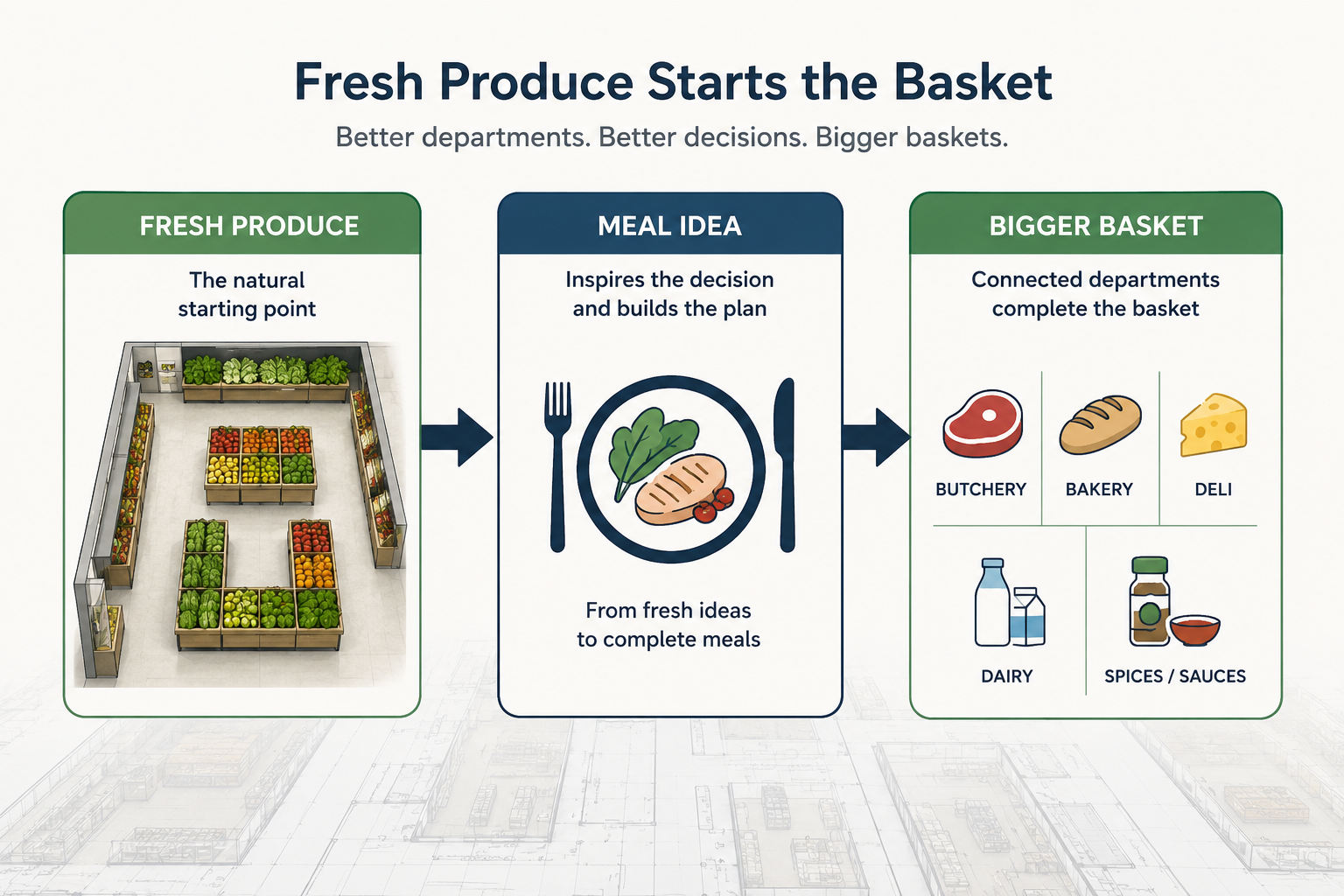
Fresh produce is one of the first places shoppers judge a supermarket.
They read the department quickly. Colour, freshness, cleanliness, price clarity and display discipline all tell the shopper whether the store feels trustworthy.
That means Fruit & Veg does more than sell produce.
It sets the tone for the whole supermarket.
But this department is often underused. In many stores, fresh produce is planned mainly as an attractive display area near the entrance. It may look colourful, but it does not always help the shopper make a meal decision or build the rest of the basket.
That is a missed opportunity.
A strong Fruit & Veg department should do three jobs at the same time.
It should create confidence in the store.
It should support repeat shopping through core fresh lines.
It should help the shopper decide what else to buy.
The last point is where the commercial value often sits.
Fresh produce should not only fill the department. It should start the basket.
Fruit & Veg Is a Shopper Decision Area
Most shoppers do not walk into a supermarket thinking only in product categories.
They think in meals, routines and household needs.
They may be thinking:
What can I cook tonight?
What do I need for school lunchboxes?
What can I add to the braai?
What is healthy and quick?
What will stretch the family budget?
What looks fresh enough to trust?
A useful Fruit & Veg department supports these decisions.
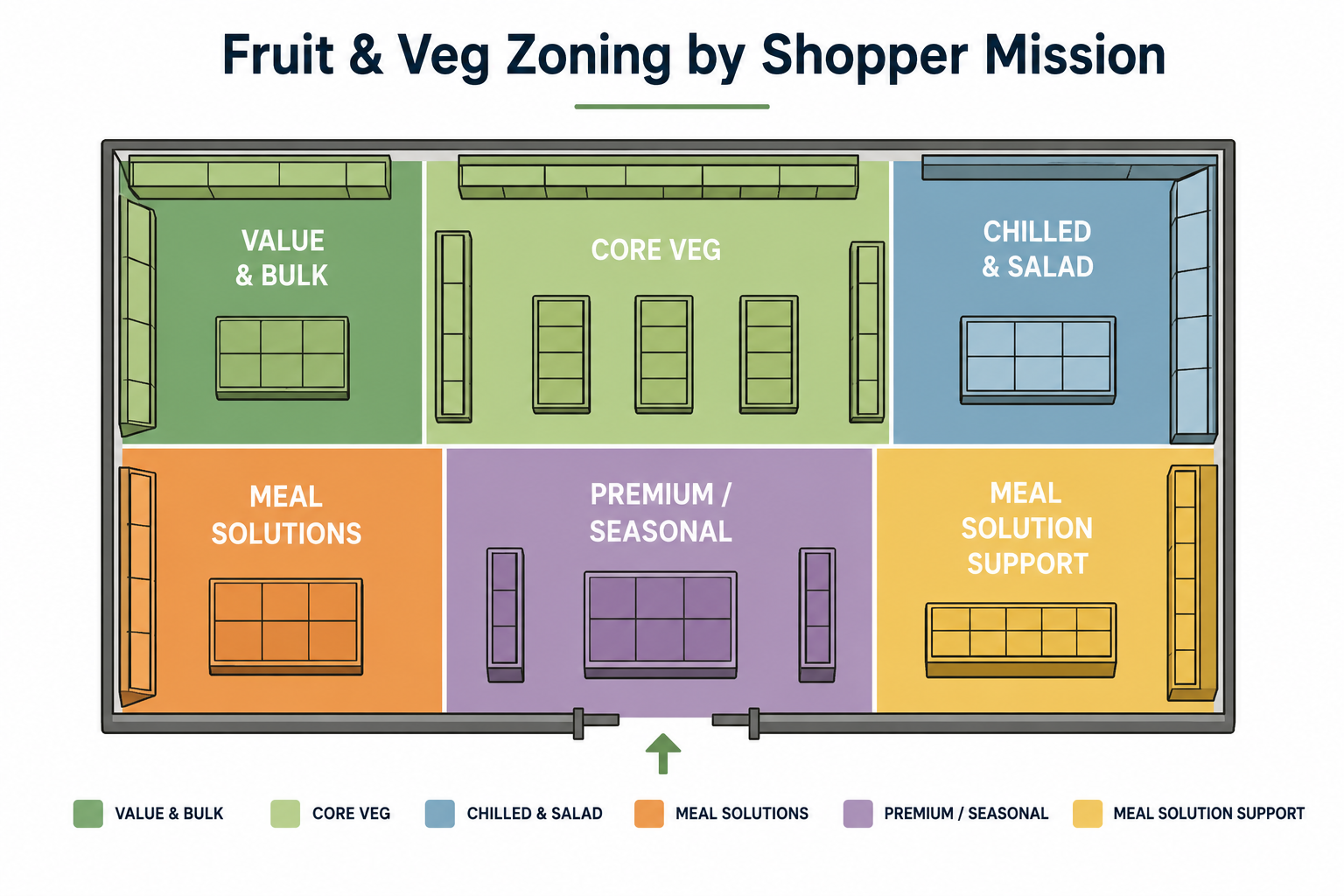
That means the layout should not only follow supplier categories. It should also follow shopper missions.
Daily top-up, weekly cooking, dinner tonight, lunchbox fruit, salad, health, value, premium entertaining and convenience all need different treatment.
A tomato is not only a tomato. It can be part of a salad, a pasta meal, a breakfast plate, a braai side, a soup base or a value cooking basket.
The same applies to onions, potatoes, peppers, herbs, mushrooms, leafy greens, citrus, berries and prepared produce.
When the department is planned around these missions, it becomes easier for shoppers to buy more complete meals.
The Department Must Create Meal Logic
A supermarket can have good produce and still miss the meal opportunity.
The problem usually sits in the blocking.
If vegetables are displayed only as stock lines, the shopper has to do all the thinking. They must connect the vegetables to meat, spices, sauces, bakery, deli and dairy on their own.
A better department gives them simple prompts.
Not complicated recipe boards.
Not visual clutter.
Just enough structure to help the shopper move from ingredient to meal.
Examples include:
Soup vegetables grouped clearly during cooler months.
Roast vegetables positioned around weekend cooking.
Braai salad ingredients made easy to find before weekends.
Fresh herbs linked to flavour and meal completion.
Lunchbox fruit presented for family top-up shopping.
Smoothie ingredients connected to wellness and dairy.
Prepared vegetables shown as a convenience solution, not just another chilled pack.
This is not decoration.
It is commercial planning.
The department starts to influence what goes into the basket beyond Fruit & Veg itself.
Fresh Produce Should Link to Other Departments
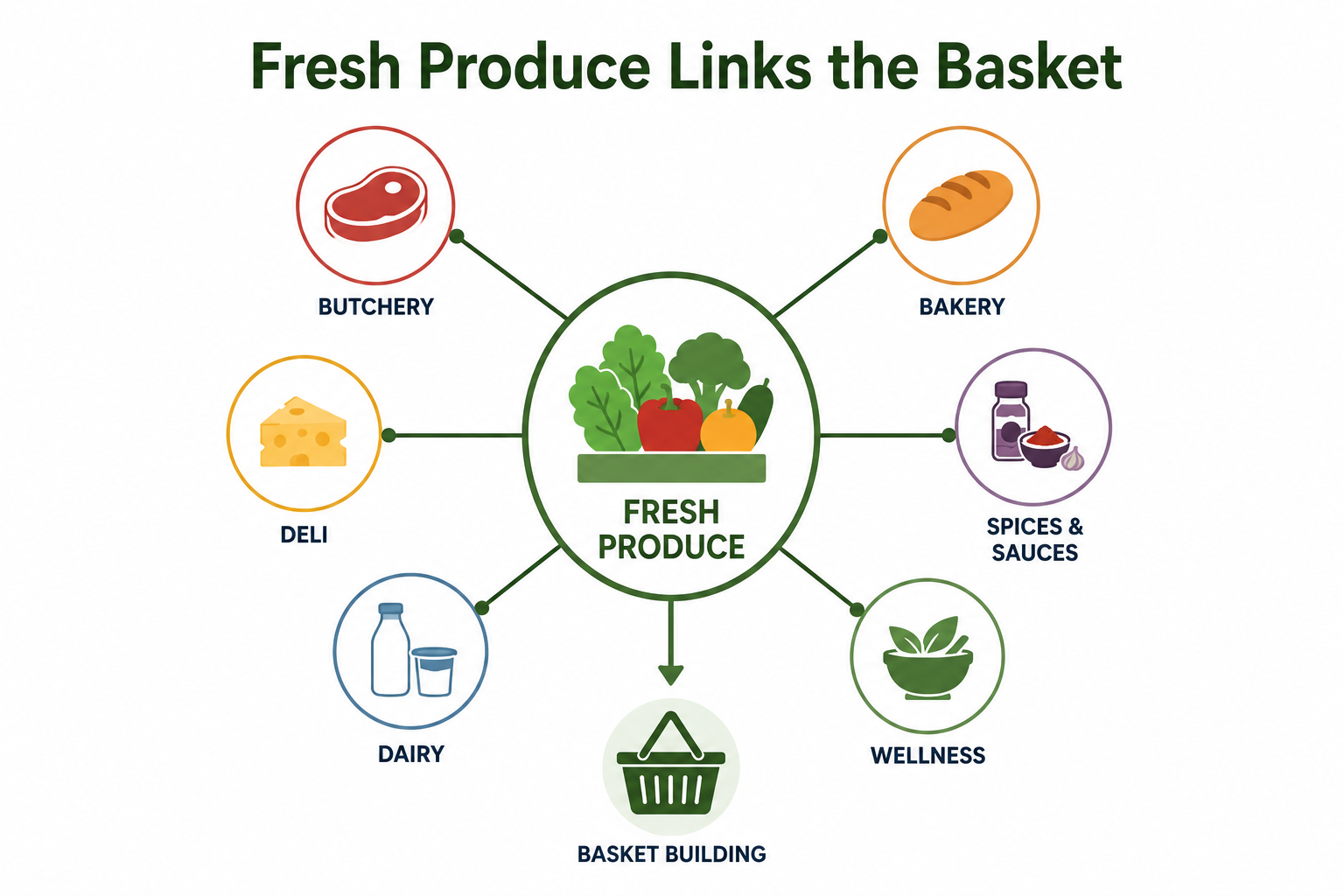
Fruit & Veg has natural links across the supermarket.
It links to butchery through roast vegetables, braai salads, marinades and meal preparation.
It links to bakery through lunch, salad rolls, breakfast and entertaining.
It links to deli through prepared sides, salads and convenience meals.
It links to spices and sauces through flavour, cooking ideas and meal starters.
It links to dairy through yoghurt, smoothies and breakfast fruit.
It links to wellness through berries, leafy greens, citrus, ginger and turmeric.
These links should not be left to chance.
They should be considered during layout planning, category blocking, signage direction and promotional planning.
This does not mean every store needs a large, theatrical fresh market concept. It means the department should have a commercial reason behind its layout.
The shopper should be able to understand the department quickly.
Where are the staples?
Where is the value?
Where is the salad?
Where is the dinner solution?
Where is the premium or seasonal offer?
Where is the quick convenience option?
When those answers are clear, the department works harder.
Product Condition Still Comes First
Meal planning cannot override product condition.
This is where many Fruit & Veg departments get into trouble. They build a good-looking display, but the product is placed in the wrong environment, under the wrong lighting, in the wrong depth, or in a fixture the store team cannot maintain.
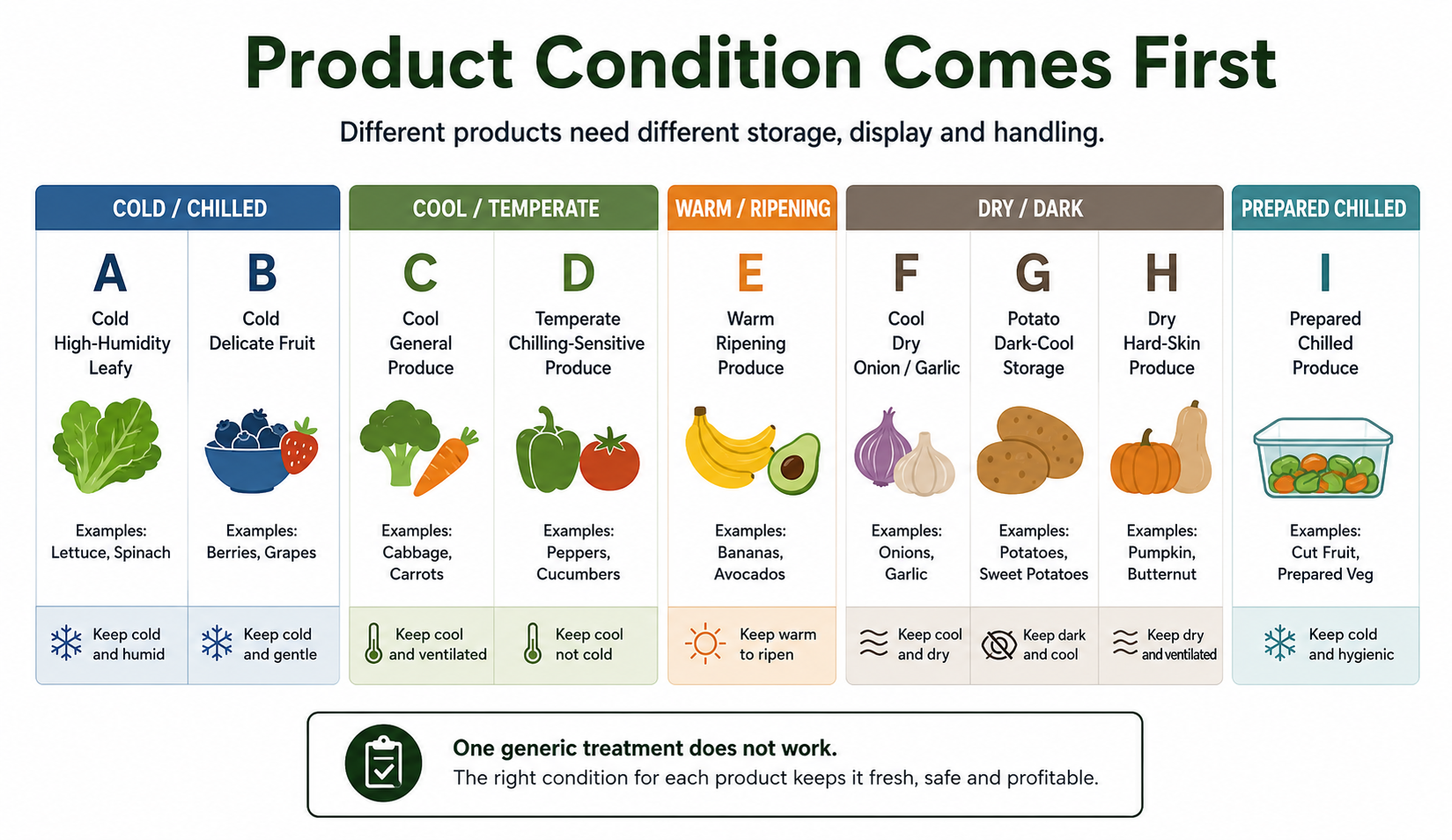
Fresh produce is not one product group with one operating rule.
Leafy greens need a different environment from bananas.
Berries need different handling from potatoes.
Tomatoes should not be treated like chilled salad.
Onions need dry ventilation.
Prepared produce needs strict chilled control and date rotation.
Potatoes need visibility, but not bright feature lighting.
So the design sequence matters.
First, understand the product.
Then understand the shopper mission.
Then select the fixture, lighting, signage and replenishment method.
If this sequence is reversed, the department may look good on opening day but become difficult to operate after a few weeks.
A Fruit & Veg department must look fresh, but it must also protect shelf life, reduce shrink and remain practical for the store team.
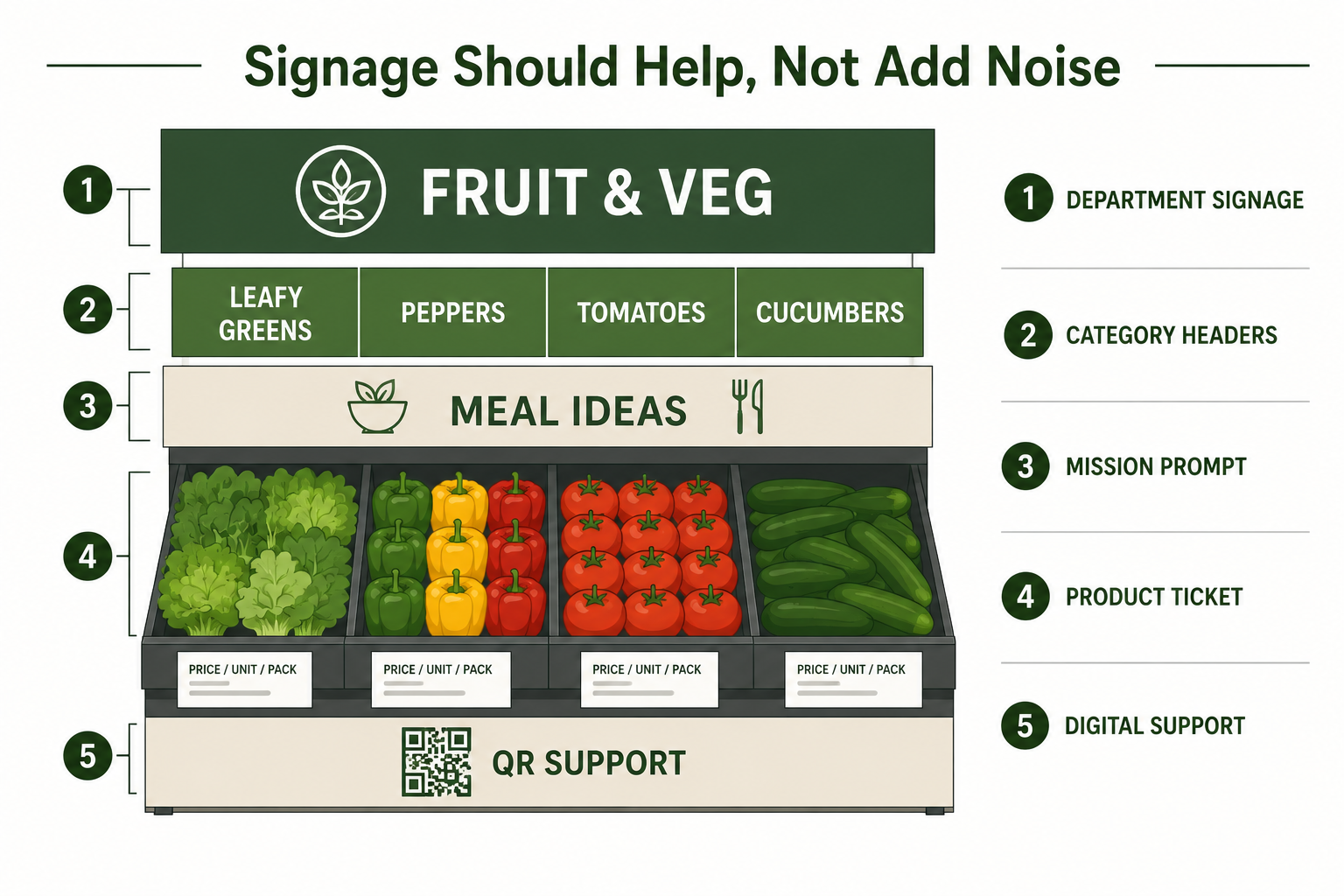
Signage Should Help, Not Add Noise
Fresh produce already has strong visual activity.
There is colour, texture, crates, display furniture, promotional stock, price tickets, staff activity and customer movement.
If signage is added without discipline, the department becomes harder to shop.
Good signage should create order.
The hierarchy should be simple:
Department sign: where am I?
Category signs: where is fruit, veg, salad, herbs, prepared and value?
Mission prompts: what helps with soup, stir-fry, braai salad or lunchboxes?
Product tickets: what is it, what does it cost, and is it per kg, each or per pack?
QR support: what extra information is useful enough to justify scanning?
Price clarity is the most important layer.
A shopper may forgive a simple department. They will not easily forgive unclear prices, confusing units or promotional tickets that do not match the product.
QR Codes and Premium Content Are a Final Layer
QR codes, grower stories, seasonal pages, storage tips and recipe ideas can add value.
But they should not be used to hide weak department planning.
A QR code cannot fix unclear pricing.
A grower story cannot fix tired product.
A recipe idea cannot fix bad blocking.
Premium wording cannot fix poor range control.
Provenance claims damage trust if they are vague or not maintained.
The correct role of QR and content is support.
Use it where it helps the shopper without cluttering the physical department.
Good uses include:
Seasonal produce notes.
Simple storage tips.
Short meal ideas.
Verified local grower stories.
Links between produce, butchery, spices, bakery and dairy.
Health or nutrition support where claims are safe and controlled.
The rule is simple: only add content that is true, useful and maintained.
Dead QR pages and outdated seasonal information make the department look neglected.
What Retailers Should Check Before Redesigning Fruit & Veg
Before changing fixtures, refrigeration, signage or layout, retailers should ask a few practical questions.
Does the department support real shopper missions?
Are the core lines easy to find and easy to price?
Can the shopper see meal ideas without being overloaded?
Are herbs, spices, sauces, deli, bakery and butchery considered as basket links?
Are seasonal lines planned commercially, not only visually?
Are product-condition needs understood before fixtures are selected?
Does the lighting support freshness without damaging sensitive products?
Can the store team replenish, cull, clean and maintain the display every day?
Is the department measured by margin after shrink, not only by sales?
These questions matter because Fruit & Veg is not only a front-of-store display.
It is a commercial department with high visibility, high trust value and high shrink risk.
Final Thought
Fresh produce should make the supermarket feel fresh.
But that is only the starting point.
A well-planned Fruit & Veg department should help the shopper decide what to cook, what to add, what to trust and what to buy next.
That is where the department starts to do more than sell ingredients.
It starts the basket.
Planning a New or Upgraded Fruit & Veg Department?
Grove Retail Design helps supermarket owners, operators and development teams plan practical food retail departments around shopper missions, product condition, fixture logic and operational control.
Download the Fruit & Veg Department Design Guide or contact Grove Retail Design to discuss your department planning.
Need help applying this to a live supermarket or QSR project?
See Services or Contact Grove Retail Design.
