Bakery Should Not Only Smell Good
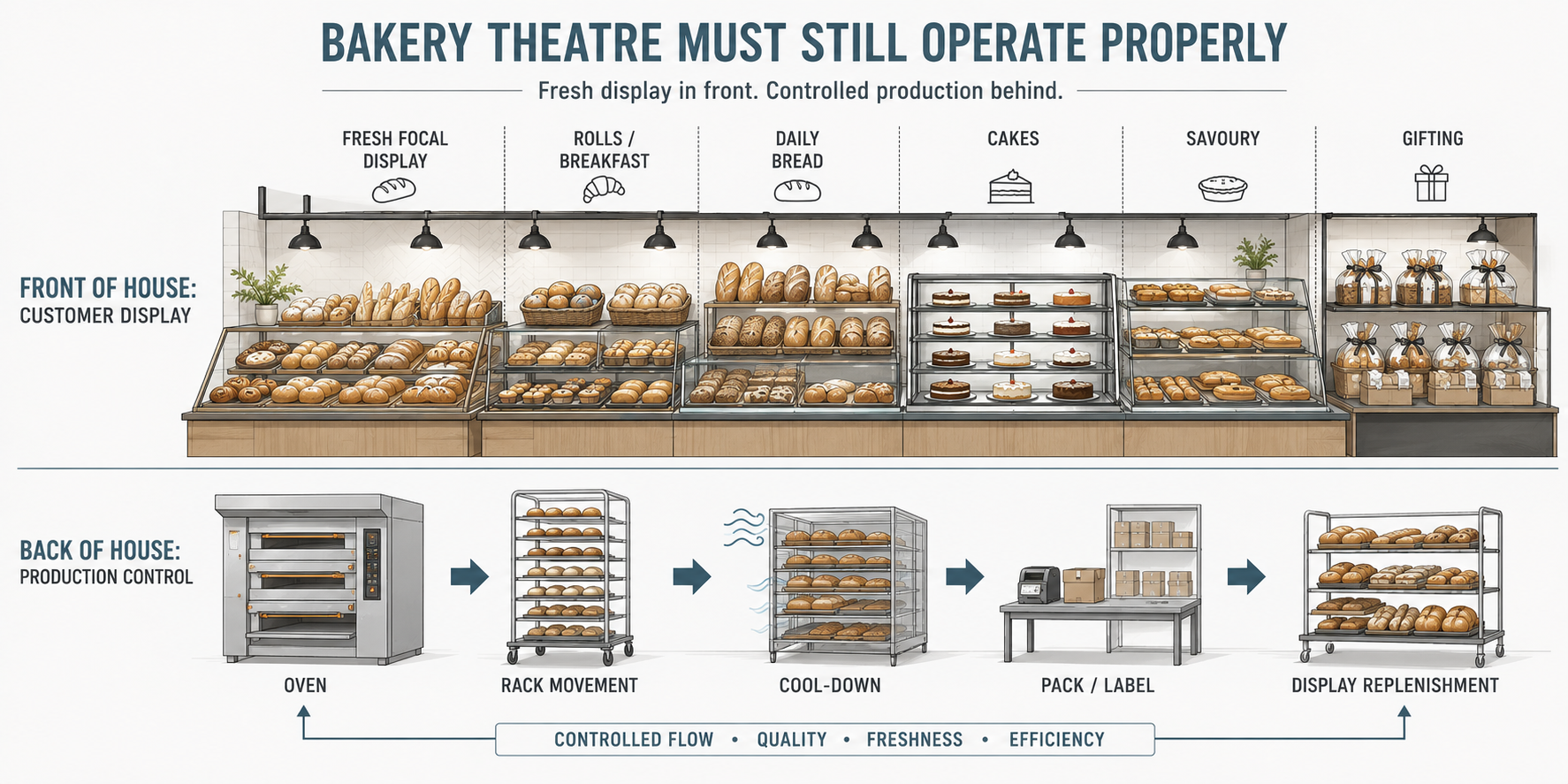
Bakery should create customer theatre while still operating as a controlled production department.
A supermarket bakery has one of the strongest emotional pulls in the store.
The smell of fresh bread, the sight of product coming out of the oven and the warmth of a good bakery display can make the whole supermarket feel fresher and more credible.
But smell is only the invitation.
A bakery can attract attention and still underperform. It can look busy and still carry too much waste. It can have visible ovens and still be difficult to operate. It can create theatre for the customer, but pressure for the team behind the counter.
A strong supermarket bakery should do more than smell good.
It must work as both:
a customer-facing fresh department; and
a controlled production and replenishment system.
That balance is where the commercial value sits.
Bakery is more than a bread corner
The mistake in many supermarket bakeries is allowing standard bread to define the whole department.
Daily bread matters. It drives habit, repeat visits and price comparison. Customers must be able to find it quickly.
But if the first impression of the bakery is only a wall of staple bread, the department starts to feel like stock rather than fresh food.
A bakery has a wider commercial role.
It should protect daily bread traffic, but it should also build basket value through rolls, pastries, cakes, savoury bakery, breakfast products, lunch products, celebration lines and gifting.
The design question is not only: where does the bread go?
The better question is: what commercial job must this bakery perform?
In some stores, the main role may be daily bread and value. In others, it may be premium freshness, cake sales, coffee attachment, lunch, gifting or local speciality products. Where coffee seating is part of the plan, check the seating area before tables go near the cabinets.
The layout should follow that decision.
Freshness must lead the first impression
Visibility matters in bakery.
Customers should understand the department quickly. They should be able to see what is fresh, what is daily staple, what is self-service, what is for breakfast, what is for lunch, what is for celebration and what is seasonal.
That does not happen by accident.
A good bakery display needs clear zones. Fresh focal display, rolls, breakfast bakery, daily bread, cakes, savoury products and gifting should not blur into one mixed wall of product.
When everything is pushed together, customers have to work too hard to understand the offer. Price tickets become unclear. Service rules become unclear. Higher-value products get lost. The department may be full, but it does not sell with enough clarity.
Freshness should lead the bakery. Daily bread should stay accessible. Higher-value products should have enough visibility to be noticed.
That is how the department moves from bread display to fresh department.
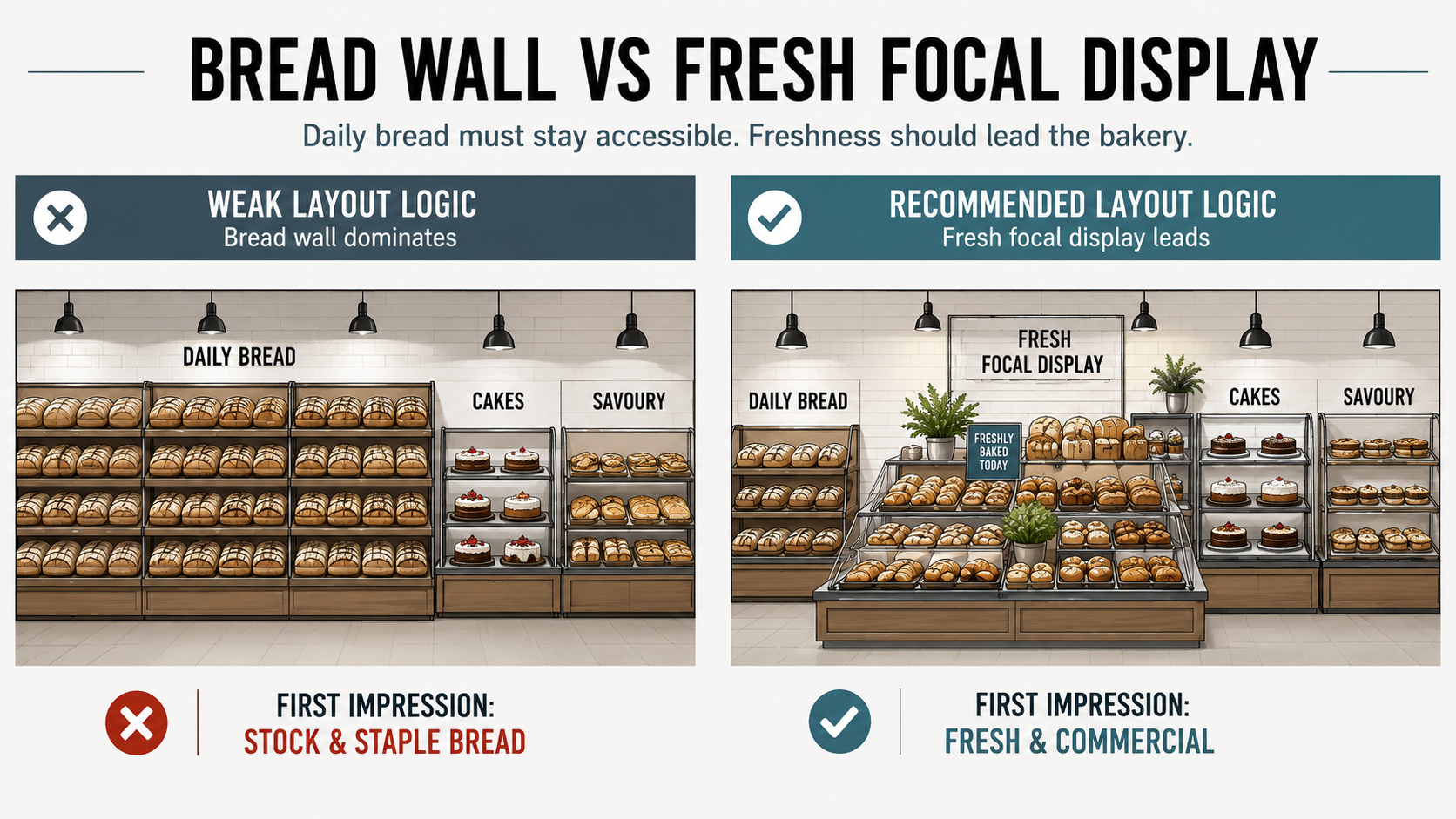
Daily bread must be easy to find, but fresh-baked product should lead the first bakery impression.
Service counter or self-service is not a style choice
The bakery service model must be deliberate.
A bakery does not need one service model for every product. Rolls, loose breads, cakes, pastries, value packs and premium desserts all behave differently.
Full self-service can work for simple dry bakery products, but it needs bags, tongs, price clarity, cleaning and reset routines. Without control, it quickly becomes messy.
Assisted self-service can work for loose breads, rolls and pastries where the customer selects product but staff remain close enough to supervise, clean and reset.
Staffed service may be justified for premium cakes, delicate pastries, cream products or products where hygiene and presentation matter more.
Pre-packed self-service can work for muffins, cookies, slices, doughnuts and value packs, but packaging must not make the product look stale or over-handled.
The wrong service model creates real problems:
queues;
labour pressure;
poor hygiene perception;
messy displays;
weak product confidence;
unnecessary packaging cost.
This is why bakery service design must be linked to product type, staff capability and store operating discipline.
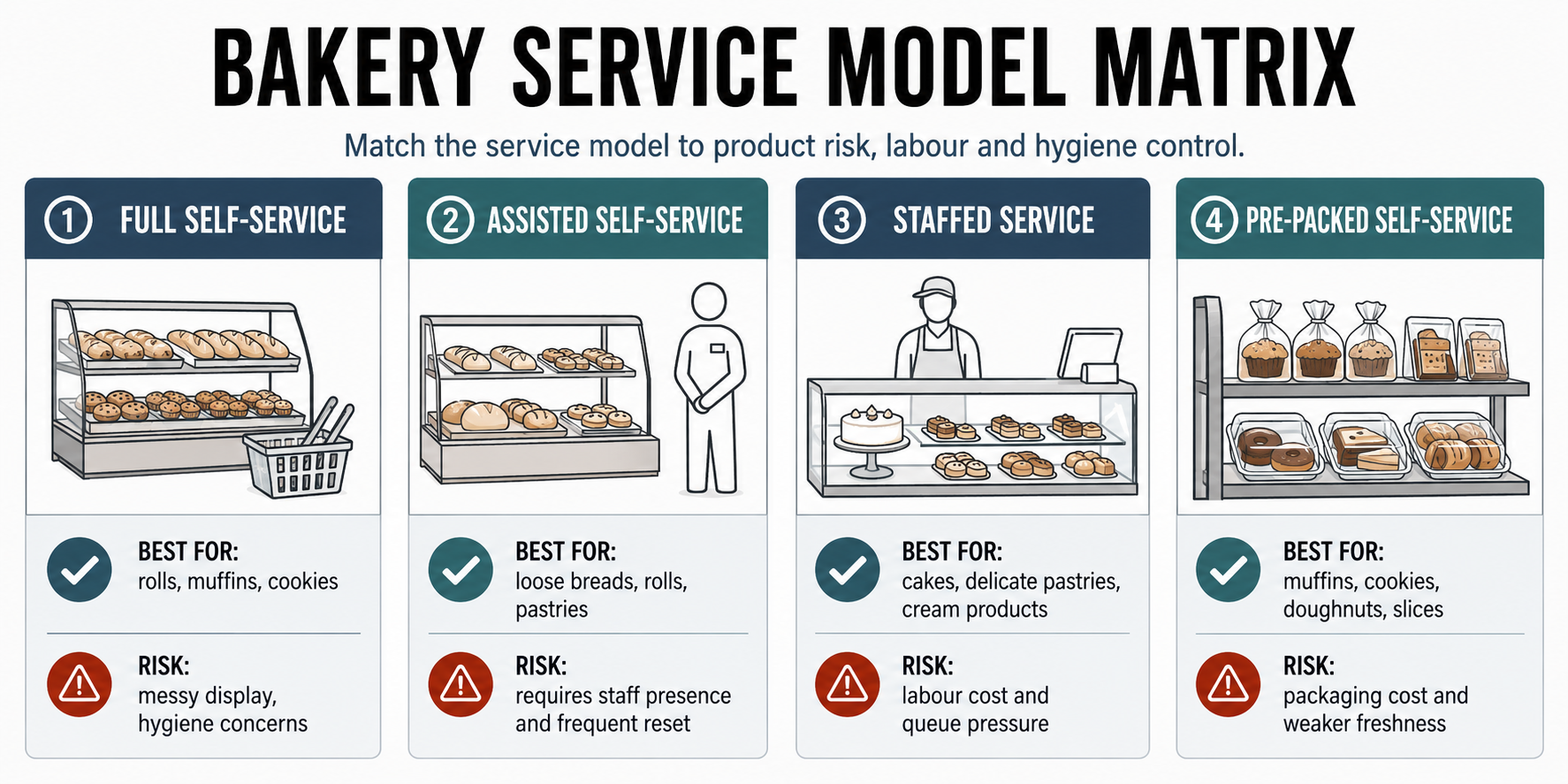
Different bakery products need different service models. One model does not fit the whole department.
Display height, lighting and signage affect trust
Bakery presentation is not decoration.
It affects trust, appetite and decision-making.
Display height affects what customers see first, how comfortably they can reach product and whether the display feels full or flat. A product can be good but still fail if it sits too low, too deep, too crowded or badly lit.
Lighting matters because bakery is a visual department. Bread, rolls, croissants and pastries need warm, high-quality light that supports crust colour and freshness. Cakes and desserts need clean display lighting that makes product colour accurate without glare.
Behind the scenes, production, packing and labelling need more neutral task light so staff can work accurately.
One lighting approach for the whole bakery is usually the wrong answer.
Signage also needs discipline. Bakery signage should help the customer decide, not decorate the wall.
The customer needs to know:
where the bakery is;
what the main zones are;
how to buy the product;
what the product costs;
whether staff assistance is needed;
where to order cakes or special items;
what is seasonal, fresh, local or occasion-based.
If signage does not help the buying decision, it is probably noise.
Production theatre only works when the operation is controlled
Visible bakery activity can be powerful.
Customers like signs of freshness. Ovens, staff activity, product finishing and replenishment can all support confidence.
But production theatre only works when the operation behind it is clean, controlled and credible.
Theatre fails when the customer sees clutter, dirty trays, uncontrolled rack parking, poor cool-down discipline, blocked routes or staff fighting the layout.
A bakery should not show activity for the sake of activity. It should show confidence.
That means the production flow must be planned properly. Receiving, storage, preparation, baking, cooling, finishing, packing, labelling and replenishment must move in a logical direction.
Cool-down is especially important. Product leaving the oven still needs time and space before slicing, packing or display. If cool-down is treated as leftover space, the department starts to break down operationally.
The customer sees the display. The store team lives with the flow.
Both must work.
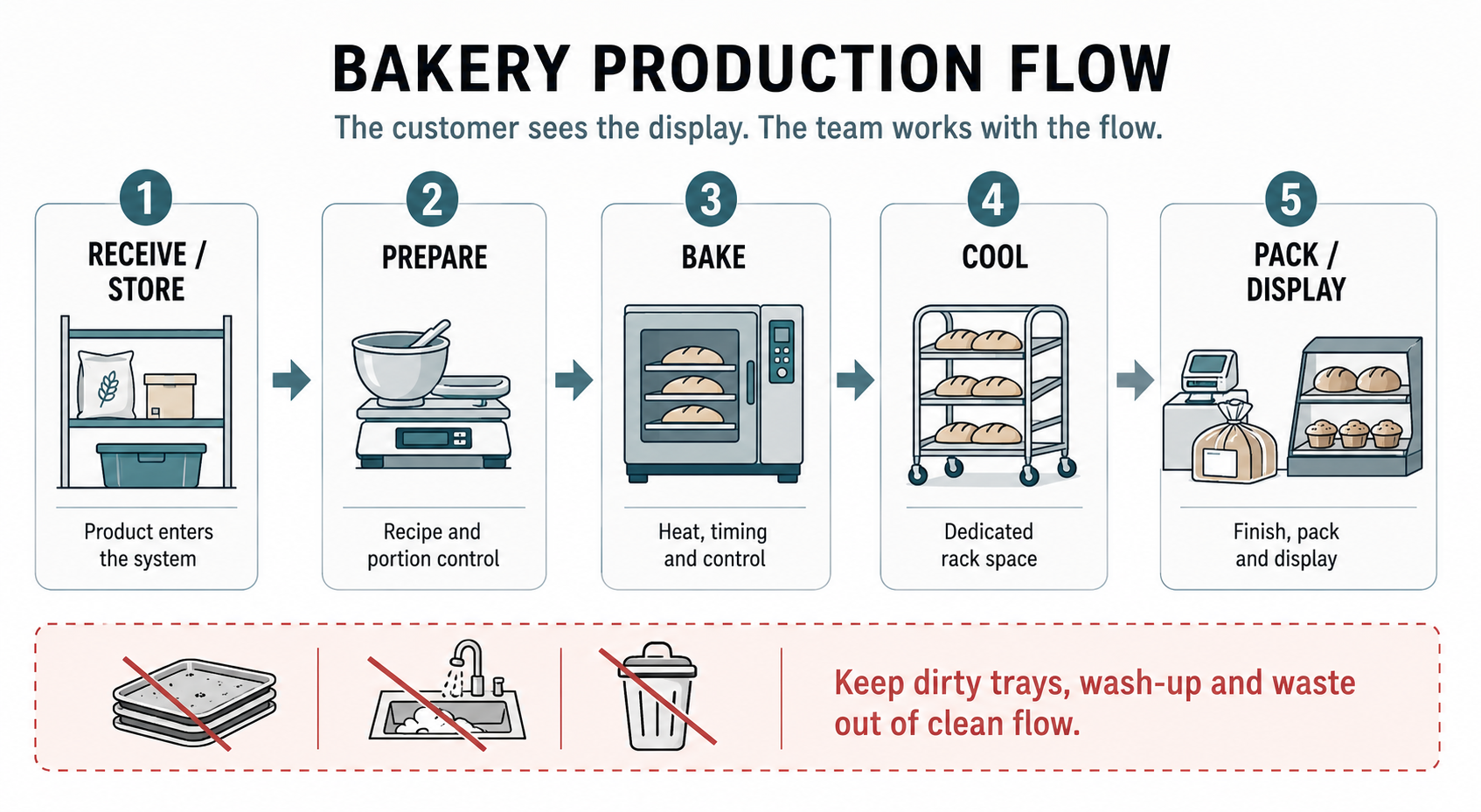
Bakery production must move logically from receiving and preparation through baking, cooling, packing and display.
Bakery should connect to customer missions
A supermarket bakery becomes stronger when it helps the customer solve a meal or occasion.
Bread is only one part of the opportunity.
Bakery can link naturally to:
coffee and breakfast;
deli and cheese;
lunch and food-to-go;
butchery and braai;
confectionery and treats;
gifting and seasonal occasions.
These links should not be random.
A small bakery satellite near coffee can make sense if it has a clear range, clear owner and freshness rule. A gifting display can work if packaging, pricing, product quality and removal date are controlled. Savoury bakery can support lunch, but ownership with hot foods must be clear.
The danger is using bakery satellites to hide overproduction or fill empty space.
That weakens the department.
Every bakery satellite or linked display should have:
a clear customer mission;
a limited product range;
a replenishment owner;
a freshness rule;
a date-control rule;
a removal rule.
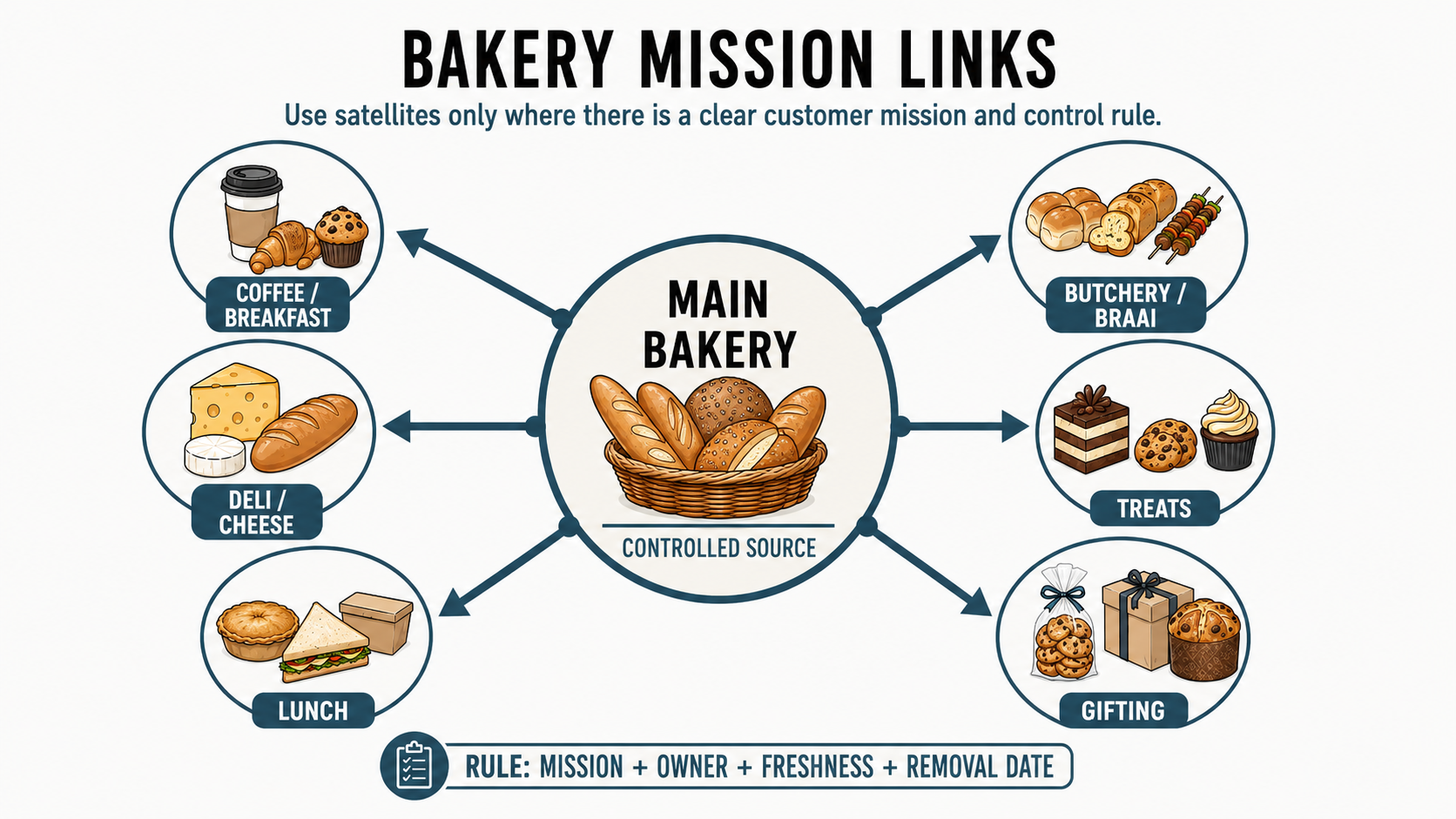
Bakery can support coffee, deli, lunch, butchery, treats and gifting when each link has a clear mission and control rule.
The back-of-house decides whether the front-of-house lasts
A bakery often looks best at opening.
The real test is later in the day.
Does it still look fresh at 11:00?
Does the team still replenish properly after lunch?
Are product labels still correct?
Are bags, tongs and packaging still in the right place?
Are cakes still presented calmly?
Are markdowns controlled?
Is waste being recorded properly?
Can staff move racks without blocking customer flow?
These are design questions as much as operating questions.
A good-looking bakery fails if the operating system cannot maintain it.
That is why the back-of-house cannot be planned as an afterthought. Storage, freezer capacity, ovens, proofing, rack movement, cool-down, wash-up, packing, labelling, waste and replenishment all affect what the customer experiences in front.
The bakery should be signed off under live operating logic, not only as a completed fit-out.
Most bakery problems start behind the counter — see why most bakery failures are planning failures
Questions to ask before redesigning a supermarket bakery
Before approving a new or upgraded bakery layout, ask these questions:
What is the bakery’s main commercial role: daily traffic, freshness signal, margin growth or meal solution?
What operating model is realistic: buy-in, bake-off, hybrid or scratch?
What should customers see first when they enter the bakery zone?
Is daily bread easy to find without dominating the whole department?
Which products should be self-service, assisted, staffed or pre-packed?
Are rolls, cakes, savouries, breakfast and gifting visible enough to be noticed?
Does lighting support product appeal and staff accuracy?
Does signage help the customer decide, or is it just decoration?
Does the bakery link naturally to coffee, deli, lunch, confectionery or gifting?
Can staff replenish without fighting the customer flow?
Is cool-down, packing, labelling and waste control properly planned?
Does the department still work later in the trading day, not only at opening?
These questions protect the department from becoming attractive but weak.
Bakery theatre must still operate properly
A supermarket bakery should smell good. That is part of its value.
But smell alone does not make the department commercially strong.
The result comes from visibility, display clarity, service model, lighting, production flow, cleanliness, replenishment and waste control.
A strong bakery is not only a production room. It is also not only customer theatre.
It is both.
When the department is planned properly, the bakery can protect daily bread traffic, create a freshness signal, support breakfast and lunch, build cake and gifting sales, and help the store improve basket value.
That is where bakery moves from a nice-smelling department to a department that earns its space.
Planning a new or upgraded supermarket bakery?
Grove Retail Design helps supermarket and food retail teams think through layout, department planning, working drawings and practical project readiness before expensive decisions are locked in.
Contact Grove Retail Design to discuss a bakery layout review or department planning project.
